Introduction
Cuts look easy—until scrap piles up. The die cutting process is a controlled workflow, not a single press. It explains what happens inside a die cutting machine, and which steps protect accuracy.
In this article, you’ll learn the core stages, common failure points, and how to keep output consistent.
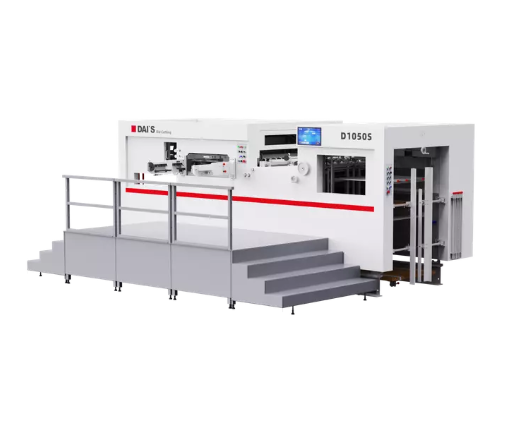
The die cutting process step by step
A reliable die cutting process follows a repeatable sequence. Each step has a purpose: reduce variation, protect yield, and make output predictable.
| Step | Purpose | Key Controls (in a die cutting machine) | Common Problems |
| Define dieline & outcome | Clarify what “good” means | Feature labeling, tolerances, no-go zones | Wrong cut type, tight features, unclear specs |
| Choose workflow | Match material form to process | Sheet vs roll, finishing path | Over-handling, low throughput, drift risk |
| Prepare materials | Reduce variation before cutting | Thickness, curl/static, adhesive/liner pairing | Depth swing, mark read errors, matrix breaks |
| Setup tooling & registration | Turn design into repeatable output | Die mounting, clearance, sensor/camera setup | Misalignment, poor registration, uneven cut |
| Run & tune | Stabilize quality at speed | Pressure, speed, clearance, heat | Ragged edges, liner cut-through, incomplete cuts |
| Strip & separate | Make throughput real | Waste path, take-up torque, de-nesting | Matrix tears, jams, slowdowns |
| Inspect & validate | Catch drift before it scales | CTQs, sampling points, defect logging | Late detection, inconsistent acceptance |
Define the dieline and the desired result
Start by defining the outcome, because “die cut” can mean several different things. You may need full separation (through cutting), or you may need a kiss cut that leaves a liner intact. You may also need scoring, creasing, perforation, or embossing in the same pass. The dieline should clearly label each feature type and include any “no-go” zones where cuts must not drift.
What to lock before tooling begins:
Final dimensions and allowable tolerances
Feature types (cut, kiss cut, score/crease, perf, emboss)
Minimum radii, minimum web widths, and small-feature limits
Registration approach (printed marks, sensors, camera)
Material orientation notes (grain direction, print direction)
How parts must be delivered (rewound, sheeted, stacked, counted)
Choose the workflow: sheet-fed or roll-to-roll
The workflow decides how material enters the process and how parts leave it. Sheet-fed jobs are common for paperboard and thicker sheets where stability matters and parts are handled in stacks. Roll-to-roll (web) workflows are common for films, foils, labels, and tapes where continuous feeding and tension control are the core requirements. A web-based die cutting machine often enables inline steps like laminating, slitting, and matrix removal, which can reduce handling and speed up total output.
A simple way to think about it:
Use sheet-fed when your material is rigid or thick, or when stacking and blank handling is the priority
Use roll-to-roll when continuous production, stripping, and downstream converting steps matter more
Prepare materials so they behave predictably
Material variation is one of the most common causes of “mystery defects.” Thickness drift changes cut depth. Curl and static affect feeding and registration. Adhesives affect matrix removal and can build up on tooling. Laminates add layer-to-layer differences that change how the cut looks and feels.
Quick material checks that prevent avoidable scrap:
Confirm thickness consistency across the roll or stack
Check for curl, camber, or telescoping rolls
Verify adhesive and liner pairing if you are kiss cutting
Check surface cleanliness, dust, and handling damage
Validate that print marks are high-contrast and readable
Set up tooling and registration
Setup turns your dieline into a physical cut path. Flatbed setups focus on platen alignment and a controlled press stroke. Rotary setups focus on stable web tracking, die-to-anvil contact, and consistent tension. In both cases, registration is where most “precision” is won or lost. Even a high-end die cutting machine cannot compensate for a die mounted out of square, unstable tension, or marks that the sensor cannot read reliably.
Core setup checkpoints:
Die mounting is square and secure
Anvil/counter plate is clean, flat, and undamaged
Clearance is set for the material structure (especially for laminates)
Registration system is calibrated and stable at the target speed
Waste path and take-up are prepared before the first production run
Run the cut and tune the key variables
During the run, most process control comes down to three variables: pressure, speed, and clearance. Pressure drives the cutting edge into the material. Speed changes dwell time and heat buildup. Clearance determines whether the cut finishes cleanly or crushes the edge. If you are kiss cutting, depth control becomes the main challenge because you want a clean face cut while keeping the liner intact.
A practical tuning approach:
Start slow with conservative pressure
Increase pressure until the cut closes cleanly
Increase speed in steps, watching for edge change or drift
Recheck depth after speed changes and roll changes
Lock parameters once output stabilizes and remains repeatable
What “stable” output looks like:
Clean edges without tearing or fuzzing
No liner damage during kiss cuts
Consistent registration across time, not just at the start
Waste removal that does not break or jam
Strip waste and separate parts
Many teams underestimate this step, but stripping often determines real throughput. In label converting, matrix removal is the test that reveals whether the dieline, adhesive, and tension are working together. In sheet-fed work, de-nesting and part separation affect labor time and defect risk, especially when parts are small or tightly nested.
What improves stripping success:
Avoid extremely thin waste webs near sharp corners
Design balanced bridges and waste paths that can carry tension
Maintain steady waste take-up torque and a smooth path
Control static on films and liners
Keep adhesive build-up under control with cleaning routines
Inspect and validate so the process stays controlled
You can’t inspect every part, so you need to inspect the features most likely to fail your customer. In many B2B applications, the critical-to-quality items are registration alignment, cut depth (especially kiss cuts), edge quality, crease performance, and dimensional stability. The best sampling plan matches the moments when drift occurs: after speed changes, roll changes, operator interventions, or material lots.
A practical validation loop:
First-article approval for each setup
Regular checks at defined intervals
Extra checks after roll/splice changes
Final audit before packing
Simple defect logging that identifies root causes over time
What happens inside a die cutting machine
A die cutting machine is a controlled force-and-position system. It converts motion into pressure and applies that pressure at the right place, at the right time, at the right depth. When people struggle with die cutting, it is usually because one of those controls is not stable.
How force and clearance create a clean cut
A cut finishes when applied stress exceeds material strength. That sounds obvious, but it explains why “more pressure” is not always the answer. Too little clearance can leave tags or incomplete cuts. Too much pressure or the wrong support can crush edges, distort small features, or damage liners. Materials like foam and laminates also compress and rebound, which means cut depth can change even when the machine settings look unchanged.
Flatbed stroke versus rotary continuous cutting
Flatbed cutting uses a press stroke that delivers high peak force, which is why it performs well on thicker stocks and complex blanks. Rotary cutting uses continuous rotation, which is why it performs well on webs, high speeds, and inline converting steps. Both can be precise, but their failure modes are different: flatbed work often reveals platen unevenness and localized crush, while rotary work often reveals tension-driven drift and registration instability.
Where defects usually begin
Most defects trace back to a short list of sources: feeding, registration, die wear, and material variation. Feeding problems cause skew and stretch. Registration problems cause offset cuts. Wear causes ragged edges and rising pressure needs. Material drift changes depth and stripping behavior. A disciplined troubleshooting method isolates one variable at a time, which is faster than chasing multiple settings in a loop.
Die cutting machine types and when to use each
Choosing a die cutting machine is not about buying “the fastest.” It is about matching the process to volume, material, finishing requirements, and how often you change jobs. The same dieline can behave very differently across machines because each platform controls force, registration, and waste handling in its own way. If you pick the wrong type, you will feel it as unstable edges, slow changeovers, or a process that only works “when everything is perfect.” A good match makes output boring—in a good way—because settings stay stable, scrap stays low, and operators spend more time producing than adjusting.
| Die Cutting Machine Type | Best For | Strengths | Trade-offs |
| Flatbed die cutting machine | Thick sheets, paperboard, complex blanks | High peak force, stable sheets, versatile jobs | Slower cycles, longer setup |
| Rotary die cutting machine | High-speed web runs (labels/films/tapes) | Continuous motion, inline converting, high throughput | Web handling skill needed; tension drives quality |
| Semi-rotary die cutting machine | Many SKUs, short-to-mid label runs | Faster changeovers, efficient repeat control | Lower top speed than full rotary |
| Digital cutting (support) | Prototypes, dieline validation, ultra-short runs | No hard tooling, fast iteration | Unit cost higher at scale |
Flatbed die cutting machine
Flatbed machines are a strong fit for thicker sheets, paperboard, and jobs that need high force and stable sheet handling. Their advantage is the press stroke: it delivers high peak force in a controlled “hit,” which helps when you need clean separation through tough stock, deep creases, or complex carton structures. Flatbed also tends to be forgiving when material stiffness varies slightly, because the sheet itself is held and supported across the cutting area.
The trade-off is changeover and speed. You often spend more time on makeready—mounting dies, setting counter plates, and dialing in cut depth across the sheet. If you run many short jobs, those minutes matter. Flatbed also rewards good platen condition; uneven pressure distribution shows up as localized crush, incomplete cuts at corners, or inconsistent crease quality. For buyers, the key is to specify what matters most: edge quality, crease performance, and tolerance on finished blanks.
Rotary die cutting machine
Rotary machines shine in high-speed web production. Instead of a press stroke, a rotary die cuts in continuous motion, which is why it scales well for labels, films, foils, and tapes. When the web is stable, rotary systems deliver impressive throughput with consistent repeat length, and they pair naturally with inline laminating, slitting, and matrix removal. That “one-pass” workflow often reduces handling risk and labor cost.
The constraint is web discipline. Tension, guide alignment, splice quality, and mark readability become first-class process variables. A rotary die cutting machine can hold registration tightly, but it can also drift fast if tension changes across speed ramps or if the sensor loses mark contrast. Tooling condition matters too; a slightly worn die may still cut, but matrix stripping can suddenly fail because waste behavior is more sensitive in web runs. If you want rotary to be predictable, you treat material prep and web handling as part of quality, not as “machine setup.”
Semi-rotary die cutting machine
Semi-rotary is often chosen for short-to-mid label runs, many SKUs, and frequent changes. It combines rotary tooling with an indexed motion pattern, which can cut repeat-length waste and improve efficiency when artwork and dielines change often. In real converting operations, the limiting factor is frequently changeover time rather than top speed, and semi-rotary tends to perform well in that reality.
The main limitation is ceiling speed and the “rhythm” of the system. Indexed motion can reduce continuous throughput compared with full rotary, especially on long runs, and it can be less forgiving if the process is not tuned for start-stop stability. The upside is control: when you need repeat accuracy across small batches and want to reduce waste from long repeats, semi-rotary can be a balanced choice. For sourcing, this option makes sense when the job mix is diverse and you prioritize quick setups over absolute output per hour.
Digital cutting as a complement
Digital cutting can be a useful front-end tool for prototyping, dieline validation, and ultra-short runs. It avoids hard tooling, so it is ideal when designs are still moving, when you need to confirm fit in an assembly, or when you want to validate a kiss-cut depth concept before paying for a rotary die. It also helps teams verify design rules early, such as minimum radii, small feature behavior, and whether nesting creates fragile waste islands.
Digital is usually not the final answer for stable production volume. Unit cost is higher, and throughput rarely competes with die-based lines once a job is proven. The best use is risk reduction: validate the dieline, confirm material behavior, and lock a “known good” spec that makes the transition to a physical die smoother and cheaper. If you treat digital as a process gate rather than a competing production method, it saves time and avoids expensive tooling revisions.
Cut styles you can run in one pass
Die cutting is not only “cutting out shapes.” The same process can combine multiple feature types, which is why specifications should be explicit. Many problems in production start when “die cut” is treated as a single action, while the job actually requires controlled depth, controlled folding behavior, or controlled tear strength. Naming the cut style up front forces the right conversations about tooling, inspection, and downstream handling.
| Cut Style | What It Does | Typical Use Cases | Quality Checks to Prioritize |
| Through cutting | Fully separates parts | Gaskets, inserts, packaging blanks | Edge burr/fuzz, dimensional tolerance |
| Kiss cutting | Cuts face stock, preserves liner | Labels, adhesive-backed parts | Cut depth, liner integrity, peel performance |
| Scoring / creasing | Creates controlled fold line | Cartons, structured packaging | Crack resistance, fold accuracy, crease consistency |
| Perforating | Creates tear line via ties/gaps | Tear-open features, easy-open packaging | Tear force, off-line tear risk, handling durability |
Through cutting
Through cutting fully separates the part. It is common for gaskets, inserts, and packaging blanks. The practical challenge is not “can it cut,” but “can it cut cleanly across the entire run.” Edge quality matters because burrs, tearing, or crushed edges can affect fit, sealing, appearance, and even assembly speed. Material behavior drives the defect type: paperboard can fuzz or tear fibers, plastics can burr, and foams can compress and rebound, which changes how the cut presents.
To run through cutting reliably, you control support and force distribution. A clean, stable backing surface reduces partial cuts. Consistent clearance reduces crush. Tool condition controls edge feel. If dimensional tolerance is tight, you also watch heat and speed effects, because thermal expansion or material stretch can show up as drift even when the die shape is “correct.”
Kiss cutting
Kiss cutting cuts the top layer while leaving the liner intact. This is central to label converting and many adhesive-backed parts. Depth control is the hard part because you are cutting “to a boundary” that can move with thickness variation, tension changes, and speed ramps. A job can look perfect at startup and then slowly shift into liner scoring if the material lot changes or the tool warms up.
Kiss cutting quality is more than cut depth. You also care about edge lift at corners, clean weeding, and peel behavior. A cut that is too shallow can cause label tearing during dispensing. A cut that is too deep can weaken liner integrity and trigger web breaks downstream. That is why stable tension, good mark contrast, and consistent material thickness are not optional details—they are process controls.
Scoring and creasing
Scoring and creasing create controlled folds, reduce cracking, and improve assembly consistency. Results depend on material thickness, grain direction, coatings, and whether the product is laminated or printed. A crease is not just a “line”; it is a controlled deformation that must land in the right place and create the right fold behavior without damaging the surface.
In practice, creasing is judged by what happens later: does the fold crack the print, does it spring back, and does it form cleanly during packing or assembly? If you have coated or printed board, the outer layer can fracture if the crease is too aggressive or misaligned to grain direction. For complex cartons, consistency matters as much as strength, because small variation can cause downstream gluing issues or poor box squareness.
Perforating
Perforation creates controlled tearing using cut gaps and tie points. The balance affects usability and durability. If the ties are too weak, parts can break during stripping, rewinding, or shipping vibration. If they are too strong, users tear off-line and the feature fails its purpose. That is why perforation needs both process control and functional testing, not just “it looks like a perf.”
Perfs also interact with other features. If a perf sits too close to an edge cut or a score line, the combined weakening can create premature failure. In web production, perf patterns can affect waste stability and how the web tracks. For packaging, perf performance must survive handling before the end user ever touches it.
Tooling choices that affect cost and uptime
Tooling is a business lever. It affects lead time, maintenance, changeover time, and consistency. When teams evaluate tooling only by purchase price, they often miss the larger cost drivers: setup time, scrap at startup, downtime from wear, and the speed at which a job can be restarted after a stop. The right tooling choice makes the process repeatable and predictable, which is what actually reduces cost per part.
| Tooling Option | Best Fit | Cost Profile | Uptime Impact | Notes |
| Steel-rule dies | Cartons, foam, many industrial shapes | Lower tooling cost, faster lead time | Good for mixed jobs | Not ideal for ultra-micro features |
| Flexible rotary dies | Many SKUs, frequent swaps | Moderate cost | Strong on changeovers | Uses magnetic cylinders |
| Solid rotary dies | Long, stable programs | Higher cost | Strong long-run stability | Longer replacement cycle |
| Quick-change practices | Any setup with repeat jobs | Low cost process upgrade | Big uptime gain | Labels, saved settings, setup kits |
Steel-rule dies
Steel-rule dies are common because they balance cost and flexibility, especially for cartons, foam parts, and many industrial shapes. They are often faster to make and easier to revise, which is valuable when designs are still evolving. For many applications, they deliver “production-grade” quality without the cost and lead time of more complex tooling.
The limitation shows up with very small features, tight internal corners, or extremely tight tolerances. As features shrink, edge stability and repeat accuracy become harder to maintain. Material abrasiveness also matters; abrasive stocks can accelerate wear and raise pressure needs, which then affects edge quality. If a job is sensitive, it is usually better to specify acceptance criteria clearly and plan tooling maintenance rather than expecting one die to last forever.
Rotary dies: flexible and solid
Flexible rotary dies mount on magnetic cylinders and enable quick swaps, which helps when you run many SKUs. They simplify storage, reduce changeover friction, and support fast iteration. In many label operations, that changeover advantage is the difference between profitable short runs and constant downtime.
Solid rotary dies often offer longer life and stable depth for long programs. They can be a strong choice when you run the same job frequently at scale and want predictable performance over many cycles. The trade-off is investment and agility: solid dies cost more and are slower to replace or revise. Your best choice depends on whether your business is driven by repeat programs or by variety and speed of change.
Quick-change practices
Quick change is not only hardware; it is standard work. Consistent mounting, clear labeling, saved settings, and a repeatable first-article routine reduce downtime and reduce startup scrap. This is one of the fastest ways to improve real capacity without buying a second machine, because it attacks the “hidden losses” that don’t show up in rated speed.
A mature quick-change approach also improves consistency across shifts. When operators follow the same sequence and verify the same checkpoints, fewer jobs start with “trial-and-error tuning.” Over time, those saved minutes turn into real additional output, and the quality record becomes stronger because settings are controlled rather than improvised.
Maintenance and wear control
Wear shows up as rising pressure needs, ragged edges, drifting depth, and increased stripping failures. The risk is gradual: the job may look acceptable for a while, then suddenly fail when a threshold is crossed. That is why maintenance should be tied to measurable signals, not only to calendar time.
A practical wear strategy includes routine cleaning to prevent adhesive buildup, inspection to catch edge damage early, and planned sharpening or replacement before scrap spikes. When maintenance is proactive, you protect both tooling spend and customer trust, because you avoid shipping parts that “look different” across batches.
Design rules that make the process smoother
Design choices can make die cutting stable or fragile. A die cutting machine performs best when geometry supports predictable stripping and avoids tiny, weak waste paths. Many production headaches trace back to designs that look fine on screen but create unstable waste islands, stress concentrations, or impossible tolerances in real materials.
Corner radii and stress points
Sharp corners concentrate stress and can tear films or crack board near folds. Adding radii often improves edge quality, stripping behavior, and tool life without changing the customer-visible result. Even a small radius can reduce the risk of corner lift in kiss cuts and reduce tearing during matrix removal.
Radii also improve repeatability because they reduce sensitivity to small registration shifts. When you have a sharp internal corner, a tiny offset becomes visible immediately. With a radius, the same offset may stay within acceptable appearance and function, which reduces scrap risk.
Holes, slots, and edge distance
Small features near edges can distort or tear during stripping and handling. Leaving enough material around holes and avoiding fragile islands improves run stability and reduces jams. If holes are too close to an edge, the remaining web can behave like a tear initiator, especially in films and adhesive constructions.
Slots are another common risk. Long narrow slots can deform or trap waste, and they can magnify tolerance issues because small shifts change slot width visibly. In practice, design for manufacturing means you protect features with enough surrounding structure so the process can run at speed without constant babysitting.
Scores and perfs near cuts
Scores and perfs weaken material by design. If they sit too close to an edge cut, parts can break early during stripping or shipping. Adjust spacing or patterns to keep integrity until the user needs the tear. When you must place them close, you often compensate by adjusting perf tie strength or by changing the score profile so the combined weakening does not exceed what the material can handle.
This is especially important in packaging, where parts experience stacking pressure, vibration, and handling before the user ever opens them. A feature that tears cleanly in a lab can fail in transit if the structure is too weak.
Nesting and waste strategy
Nesting should balance yield and stability. Extremely tight nesting can create narrow waste webs that break during stripping. A stable process often delivers better total yield than an aggressive layout that forces frequent stops, because downtime and scrap cost more than the few percentage points of theoretical material savings.
A good waste strategy also considers direction. Web direction affects how waste carries tension, and sheet direction affects how parts de-nest. When waste paths are planned early, stripping becomes routine rather than the constant limiter of speed.
How to choose the right die cutting machine
If you are selecting a process or sourcing a supplier, start with three matches: volume, material, and precision. The goal is to choose a machine and workflow that can hold quality at real production speed, not just during a slow sample run. Good selection also reduces supplier friction because both sides agree on what is “critical” before quoting and tooling begins.
Match volume to economics
High volume rewards throughput and uptime. Low volume rewards fast changeovers and flexible workflows. Look at total cost per finished part, including setup, scrap, and labor, not just rated machine speed. A slower machine with faster changeovers can win when you run many SKUs, because the effective output per shift depends on how often you stop and reset.
It also helps to separate “steady-state speed” from “real-world speed.” Real-world speed includes startup tuning, waste handling, inspection pauses, roll changes, and occasional rework. The right machine is the one that keeps real-world speed high, not the one with the highest number on a brochure.
Match material to capability
Films demand tension control. Foams demand stable compression. Paperboard demands clean creasing. Laminates demand stable depth across layers. A clear material list helps you select the correct machine style and tooling approach. It also prevents common mismatches, like choosing a web system for a material that is difficult to track, or choosing a flatbed setup for a job that needs continuous stripping at high speed.
When evaluating capability, focus on what the material will “fight.” Films fight static, curl, and stretch. Foams fight crush and rebound. Paperboard fights cracking and grain direction issues. Laminates fight uneven compression and layer separation. If the machine’s strengths align with those fights, the process becomes easier to control.
Match precision to process reality
Precision is not just machine specs. It is the whole system: registration method, material stability, tooling condition, and operator discipline. Define tolerances early and confirm that the process can hold them at production speed, not only in a slow trial. Also define how precision will be measured, because inspection method can change what is considered acceptable.
If you need tight registration on printed work, invest in mark quality and sensing reliability. If you need tight kiss-cut depth, invest in thickness control and stable tension. If you need tight dimensional tolerance on compressible stock, invest in support stability and controlled pressure distribution.
Provide a clean RFQ package
The fastest quotes come from complete inputs: dieline, material structure, cut type, tolerance targets, volume and batch size, finishing requirements, and quality requirements. If any of these are missing, you usually pay later in rework, delays, or mismatched expectations. A clean RFQ package also helps suppliers choose the correct workflow early, which reduces the chance of “we can do it” turning into “we can only do it with changes.”
At minimum, suppliers need to know what you consider critical, what the material is, how you want parts delivered, and how you will accept or reject output. When those are clear, both sides can focus on execution rather than interpretation.
Troubleshooting and process control
Good teams troubleshoot by isolating causes and changing one variable at a time. The goal is not to “get it running once,” but to keep it stable across shifts, lots, and speed changes. Strong process control turns troubleshooting into a repeatable checklist instead of an operator guessing game.
| Symptom | Likely Root Cause | Check First | Fast Correction Path |
| Cut offset / drift | Tension or registration instability | Web tension, guides, mark contrast | Stabilize tension; recalibrate sensor/camera |
| Incomplete cuts | Low pressure or uneven support | Pressure, support surface, clearance | Verify support; adjust clearance; then pressure |
| Ragged / fuzzy edges | Tool wear or wrong clearance | Die edge condition, debris | Clean/inspect tool; correct clearance |
| Crushed edges | Excess pressure or poor backing | Pressure, backing stiffness | Reduce pressure; improve backing/support |
| Liner cut-through (kiss cut) | Depth too deep, thickness variation | Thickness checks, pressure stability | Reduce pressure; control material variation |
| Matrix breaks / stripping jams | Weak waste path, adhesive/static | Waste web width, take-up torque | Widen waste paths; tune take-up; control static |
Registration and feeding issues
If cuts drift or marks shift, check tension, guides, mark contrast, sensor position, and repeat length stability. Speed changes are a useful test: if the defect changes with speed, tension control is often involved. Also check practical causes like roll telescoping, splice bumps, or dust on sensors, because these create intermittent problems that look “random.”
A stable registration system depends on consistent mark detection. If marks are too faint, too glossy, or placed in a noisy print area, even a good camera system can struggle. When marks are reliable and tension is stable, registration problems become much easier to solve because the process has a consistent reference.
Edge quality problems
Ragged edges, crushed edges, and incomplete cuts can come from different roots: tool wear, clearance errors, uneven support, or excessive pressure. Follow a consistent correction order so you preserve cause-and-effect and avoid chasing noise. Start by inspecting and cleaning tooling, then confirm support and clearance, then tune pressure, and only then adjust speed.
Edge quality is also tied to material lot behavior. If a job suddenly starts fuzzing or tearing, confirm whether thickness or surface conditions changed. If you always blame tooling first, you may miss a material shift that will keep repeating until you address incoming control.
Stripping failures
Matrix breaks and waste jams often come from weak waste paths, adhesive behavior, static, or unstable take-up torque. Design and material choices matter as much as machine settings, so don’t treat stripping as an afterthought. If stripping fails at corners or small islands, it often points to nesting and bridge design, not only to “machine tuning.”
Stripping is also a dynamic process: it may work at low speed and fail at higher speed because tension and inertia change. A controlled ramp-up approach helps you find the real operating window without turning the first hour into scrap.
Safety and repeatability
Repeatable setup routines, simple SOPs, and a “golden settings” record per SKU reduce variation across shifts. This is one of the simplest ways to improve output quality and reduce waste without changing hardware. When a process is documented, you can train faster, recover from stops faster, and maintain consistent quality even when staff changes.
Repeatability also improves quoting and planning. If you know your stable parameters and typical scrap drivers, you can estimate true throughput and cost per part more accurately. That is where process control becomes a business advantage, not just an operational habit.
Conclusion
The die cutting process is a controlled production loop: define the dieline and the required cut style, choose the die cutting machine workflow, prepare materials, set tooling and registration, tune pressure/speed/clearance, strip waste, and validate output with a practical inspection plan. When these steps stay stable, die cutting delivers repeatable quality, predictable cost per part, and fewer surprises at scale for B2B production.
Daishi Printing Machinery Co., Ltd. supports this value with reliable die cutting machine solutions that improve uptime, keep registration steady, and reduce scrap through consistent performance and service.
FAQ
Q: What is the die cutting process in a die cutting machine?
A: In a die cutting machine, it’s a controlled loop: dieline, setup, cut, strip, inspect; rotary die cutting machine process fits web runs.
Q: How do I set pressure on a die cutting machine without defects?
A: On a die cutting machine, tune pressure with clearance and speed, then recheck; how to set die cutting pressure depends on material thickness.
Q: What causes registration drift in a die cutting machine?
A: A die cutting machine drifts from unstable tension or weak marks; improve die cutting registration marks and web guiding first.
Q: How do I avoid liner cut-through during kiss cutting on a die cutting machine?
A: A die cutting machine needs stable depth; verify thickness and tension, then reduce pressure; kiss cutting works best with consistent liners.
Q: Flatbed vs rotary die cutting machine—how do I choose?
A: A die cutting machine choice depends on volume and material: flatbed for thick sheets, rotary for webs; compare by changeover time and uptime.
Q: What drives die cutting cost on a die cutting machine?
A: A die cutting machine cost is driven by tooling, setup time, scrap, and maintenance; steel-rule dies cut tooling cost for many jobs.


