1. The Importance of Safety in Paper Cutting Operations
Industrial paper cutters are essential machines used in the printing, packaging, and paper industries. These machines are designed to precisely cut paper and other materials in large volumes, making them crucial in mass production environments. However, the powerful and sharp cutting mechanisms can pose significant safety risks if proper safety protocols are not followed.
Adhering to strict safety measures when operating paper cutting machines not only ensures the well-being of operators but also helps maintain operational efficiency, reduce downtime, and protect the investment in expensive machinery.
In this article, we will explore essential safety protocols that must be followed when operating industrial paper cutters. We will cover topics ranging from pre-operational safety checks to operational practices, key safety features of the machines, and post-operation measures. These protocols are critical for protecting workers and maintaining a safe work environment.
2. Understanding Paper Cutting Machines: Key Features and Functions
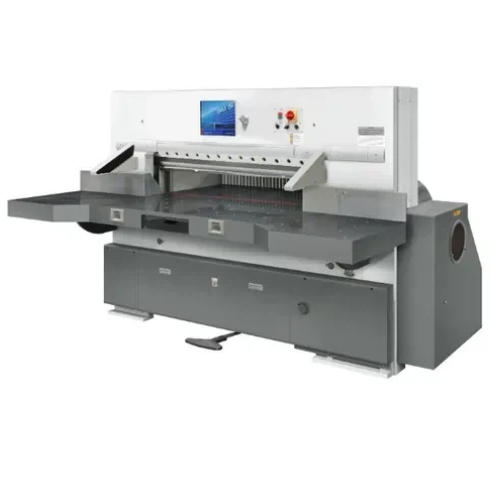
Industrial paper cutters, particularly those used in large-scale production environments, are designed to cut paper into precise sizes. These machines typically have large blades capable of cutting through various thicknesses of paper, cardstock, or other materials with incredible speed and accuracy. The basic components of an industrial paper cutting machine include:
Cutting Blades: The most critical component, used to slice through paper. These blades are usually made from high-grade steel and require regular maintenance.
Control Panel: Modern machines come equipped with a user-friendly control panel, often featuring digital displays and programmable settings for precise cutting operations.
Pressing Mechanism: This part ensures that the paper is held firmly in place while the cutting blade operates, preventing any shifting that could lead to uneven cuts.
Safety Guards and Shields: These are installed around the cutting area to protect the operator from accidental contact with the cutting blade.
Motor and Drive System: Powering the entire machine, this component provides the necessary force for the cutting blade to operate at high speeds.
These features are essential for the efficient and accurate operation of the machine. However, without the appropriate safety protocols in place, they can also present significant hazards to workers. It is therefore crucial to understand these features and how they can be safeguarded during operation.
3. Pre-Operational Safety Measures
Before operating a paper cutting machine, there are several important safety checks and preparations that need to be made. These measures will help ensure that the machine is ready for safe operation and that any potential issues are identified before they become hazards.
3.1 Proper Training
The first step in ensuring safety is providing operators with the necessary training. Operators must be trained not only on how to operate the machine but also on the safety features and emergency procedures. This training should include:
Understanding the machine’s controls: Operators should know how to adjust settings such as cutting depth, speed, and alignment.
Recognizing potential hazards: Training should cover common risks such as blade contact, paper jams, and the operation of the emergency stop button.
Responding to emergencies: Operators should be trained to act quickly in case of accidents, including how to use the emergency stop feature and how to contact emergency services if necessary.
3.2 Inspection & Maintenance
A thorough inspection of the machine before use is essential to identify any issues that could compromise safety. Key areas to check include:
Component | Checkpoints |
Cutting Blade | Ensure it is sharp, free of chips, and securely fastened. |
Safety Guards | Verify that all safety shields and guards are intact and in place. |
Control Panel | Check that the buttons and switches are functioning properly. |
Pressing Mechanism | Make sure the mechanism is working smoothly and can securely hold the paper in place. |
Emergency Stop Button | Test to confirm that it works correctly and is easily accessible. |
Regular maintenance is essential to keep the machine operating safely. Replace any damaged parts immediately, and ensure that all lubrication and cleaning procedures are followed as per the manufacturer’s guidelines.
3.3 Personal Protective Equipment (PPE)
Operators should always wear the appropriate PPE when using a paper cutting machine. This includes:
Safety Gloves: To protect the hands from cuts and abrasions.
Safety Goggles: To protect the eyes from flying paper scraps or other debris.
Hearing Protection: Given the loud noise that industrial cutters can produce, earplugs or earmuffs are recommended.
Steel-toed Boots: To protect the feet in case of accidents involving falling parts or equipment.
Using the proper PPE is an essential first step in safeguarding operators from potential injuries.
4. Operating Protocols for Safe Usage
Once the paper cutting machine has been inspected and the operator is trained and equipped with PPE, it’s time to focus on safe operating procedures. Following these protocols will ensure that the machine functions properly and that workers remain safe during operation.
4.1 Start-Up Procedures
Before starting the machine, operators should take the following steps:
Clear the Work Area: Ensure that no unnecessary objects or personnel are within the vicinity of the machine.
Check Settings: Verify that all settings on the control panel are correct, such as the cut size, speed, and pressure.
Test Run: Perform a brief test run to ensure that the machine is operating smoothly. This allows operators to identify any issues before cutting large volumes of paper.
4.2 Safe Cutting Practices
When operating the machine, operators should follow these safety guidelines:
Proper Paper Alignment: Ensure that the paper is properly aligned and secured in place before initiating the cut. Misalignment can lead to uneven cuts and potentially cause the paper to jam.
Avoid Overloading the Machine: Don’t try to cut too many sheets of paper at once. Follow the manufacturer’s guidelines for maximum cutting capacity.
Do Not Reach Near the Blade: At no point should the operator’s hands come close to the cutting blade. Always use the machine’s automated features to adjust and handle the paper.
Slow and Steady: If the machine has variable speeds, select a speed that matches the material being cut to ensure precision and reduce the risk of malfunctions.
4.3 Use of Emergency Stop Function
It is essential for operators to be familiar with the emergency stop function. In case of a malfunction or dangerous situation, operators should be able to stop the machine immediately by pressing the emergency stop button. This should be clearly marked and easily accessible.
5. Key Safety Features of Industrial Paper Cutters
Industrial paper cutting machines are equipped with various safety features designed to minimize risks. Understanding and properly utilizing these features is vital for maintaining a safe working environment.
5.1 Safety Guards & Barriers
Modern industrial paper cutters are equipped with safety guards and barriers that physically prevent the operator from coming into contact with the cutting blade. These shields are typically made of transparent materials to allow the operator to monitor the cutting process without being exposed to the blade.
5.2 Automatic Safety Shutoff Systems
Many advanced paper cutting machines come with automatic shutoff systems that engage if the machine malfunctions. These systems are designed to prevent accidents by halting the operation of the machine when it detects an issue such as a jam or improper operation.
5.3 Blade Locking Mechanisms
When the paper cutting machine is not in use, the cutting blade should be locked in a safe position. Blade locking mechanisms prevent the blade from being accidentally engaged when the machine is idle or during maintenance procedures.
6. Post-Operation Safety Practices
Once the cutting operation is complete, it’s important to follow proper post-operation safety practices. These steps ensure that the machine is safely shut down and stored, and they help prevent accidents during cleaning or maintenance.
6.1 Shutting Down the Machine Safely
To safely power down the machine, operators should:
Turn Off the Power: Ensure that all switches are turned off and the machine is disconnected from the power source if necessary.
Clear the Work Area: Remove any remaining paper or scrap materials to avoid accidents when the machine is not in operation.
6.2 Cleaning and Storing the Machine
Proper cleaning helps extend the life of the machine and reduces the risk of malfunctions:
Clean the Blades: Remove any paper dust or residue from the cutting blade to prevent buildup that could affect performance.
Lubricate Moving Parts: Apply appropriate lubricants to the moving parts as recommended by the manufacturer to ensure smooth operation.
Store Properly: Store the machine in a dry, secure location to prevent damage from environmental factors.
6.3 Disposal of Used Materials
Proper disposal of paper scraps and waste is crucial for maintaining a safe work environment:
Avoid Piling Paper Near the Machine: Excess paper piles can become a fire hazard if they are left too close to the cutting machine.
Use Fire-Resistant Containers: Dispose of waste materials in fire-resistant bins to prevent fires from spreading.
7. Conclusion
Maintaining safety in industrial paper cutting operations is critical to protecting the well-being of workers and ensuring the smooth functioning of machinery. By following proper training protocols, conducting regular machine inspections, implementing safe operational practices, and utilizing built-in safety features, businesses can significantly reduce the risk of accidents and prolong the life of their paper cutting equipment.
At DAI'S Printing Machinery Co., Ltd., we understand that safety is paramount. That's why we offer comprehensive safety protocols with all our machines, alongside ongoing training and support to ensure your operations run smoothly. We believe that prioritizing safety can prevent costly injuries and downtime, ultimately boosting productivity and operational efficiency.
If you're looking for high-quality paper cutting machines that adhere to the highest safety standards, we invite you to explore our range of products and get in touch with our experts. Let us help you maintain a safe, efficient, and long-lasting operation with our state-of-the-art equipment and professional support.
8. FAQ
8.1 What are the most important safety features of an industrial paper cutting machine?
The most critical safety features include safety guards, automatic shutoff systems, and blade locking mechanisms. These features prevent operators from coming into contact with the cutting blade and ensure that the machine operates safely during and after use.
8.2 How can I ensure my employees are adequately trained to operate paper cutting machines safely?
Ensure that all operators undergo comprehensive training that includes machine operation, safety protocols, and emergency procedures. Provide hands-on training and regular refresher courses to reinforce safety measures.
8.3 What are the most common safety risks associated with industrial paper cutters?
Common safety risks include accidental blade contact, improper handling of materials, and malfunctioning safety features. Regular maintenance and operator awareness are key to mitigating these risks.
8.4 Can safety protocols help extend the lifespan of paper cutting machines?
Yes, adhering to safety protocols, conducting regular maintenance, and performing timely repairs can extend the machine’s lifespan by preventing undue wear and tear.
8.5 What personal protective equipment should be worn when operating a paper cutting machine?
Operators should wear safety gloves, goggles, hearing protection, and steel-toed boots to minimize the risk of injury while operating the machine.


