Paper cracking during the finishing process destroys operational efficiency and wrecks profit margins. When cellulose fibers fail under excessive tension, you get material waste, rejected production runs, and angry clients. Operators often try manual workarounds on the shop floor, like localized water spritzing or misting, hoping to soften the substrate. These methods fail to scale. They introduce secondary defects, including severe paper warping, registration issues, and inconsistent impressions across the sheet.
Solving this problem requires ditching inconsistent manual interventions. The physics of paper cracking dictate that fibers need precise pressure, controlled environments, and accurate tooling to stretch without rupturing. Transitioning to precision-engineered equipment eliminates the guesswork. Evaluating specialized machinery ensures repeatable, crack-free results at scale, transforming a volatile finishing process into a predictable production standard.
Key Takeaways
- Paper cracking is primarily a symptom of mismatched pressure, incorrect dwell time, poor moisture control, and improper sheet sizing (overhang), not just defective paper.
- Upgrading to a commercial-grade embossing die cutting machine provides the micro-calibration required to prevent fiber rupture.
- Selecting between flatbed and rotary systems depends on substrate thickness, run volume, and specific tooling requirements.
- Proper make-ready processes, strategic shimming, and environmental controls (humidity) are non-negotiable implementation steps for high-yield production.
The Physics of Paper Cracking: Understanding the Root Causes
A flawless embossed or die-cut finish requires sharp edges, zero fiber exposure, structural integrity, and the complete absence of unwanted creasing. Achieving these success criteria demands a thorough understanding of how paper behaves under extreme mechanical stress. When a substrate fails to meet these standards, the root cause almost always traces back to fiber stress, tooling errors, or pressure mismanagement. You cannot fix a mechanical problem with guesswork; you must understand the material science happening on the platen.
Fiber Stress and Moisture Content
Paper consists of interwoven cellulose fibers held together by hydrogen bonds. Think of these fibers as microscopic straws. The flexibility of these fibers depends heavily on the paper grain direction and ambient humidity. Fibers align parallel to the direction the paper web travels during manufacturing. Folding or embossing against this grain forces the fibers to bend across their rigid axis, significantly increasing the likelihood of rupture. When you force a heavy 14pt cover stock into a deep brass die against the grain, the fibers resist the stretch and snap, exposing the raw white interior of the sheet.
Moisture content dictates the elasticity of the cellulose matrix. Dry fibers become brittle and lack the necessary stretch to conform to deep 3D embossing cavities. When forced into a die, the surface tension exceeds the material's elastic limit, causing the top layer of the paper to tear. Coated stocks present an additional challenge. Aqueous, UV, and laminate coatings have their own tensile limits. Often, the rigid coating cracks before the underlying paper fibers fail, creating a visible defect along the embossed edge.
Many operators attempt to solve this by directly misting the paper with water. This introduces severe complications. Direct water application causes uneven fiber swelling. The localized moisture expands the fibers irregularly, leading to immediate warping. Once the paper warps, maintaining accurate registration for subsequent press passes becomes impossible. Ambient moisture control provides the only viable method for maintaining fiber elasticity without compromising structural stability.
Tooling Incompatibilities and Make-Ready Failures
The interaction between the male die and the female counter-die (matrix) determines the depth and clarity of the impression. Mismatched dies create irregular pinch points. If the counter-die does not perfectly mirror the primary die, the paper experiences shear stress rather than uniform compression. Using cheap magnesium dies for deep, multi-level embossing often results in sharp, unrefined edges that cut into the paper rather than stretching it.
Improper clearance between these components forces the paper beyond its tensile limits. This issue escalates when processing overly thick substrate stacks. Every paper type requires a specific clearance tolerance based on its caliper (thickness). Forcing a heavy cardstock into a die configured for text-weight paper crushes the fibers at the edges of the cavity. The lack of spatial accommodation causes the substrate to stretch until the surface coating and underlying fibers snap. Operators must calculate the exact caliper of the sheet and ensure the counter-die provides adequate relief.
Inconsistent Pressure Application and Sheet Overhang
Pressure distribution across the platen must remain absolutely uniform. Uneven pressure application causes localized cracking in high-stress areas while leaving other sections of the design unembossed. This imbalance often results in unintended creasing, as the paper shifts to relieve the uneven mechanical load. If the platen is out of level by even a few thousandths of an inch, the high side will crush the sheet while the low side barely registers an impression.
Sheet overhang presents another failure point. When the paper extends past the optimal pressure zone of the platen, the overhanging material creates a fulcrum effect. The press applies massive force to the center of the sheet while the edges remain unsupported. This dynamic creates severe pinch points along the perimeter of the platen, leading to immediate edge cracking and structural creasing.
Entry-level manual rollers cannot mitigate these issues. They apply localized, rolling pressure that pushes the paper fibers in a single direction, increasing shear stress. Professional production requires equipment capable of applying simultaneous, uniform pressure across the entire surface area.
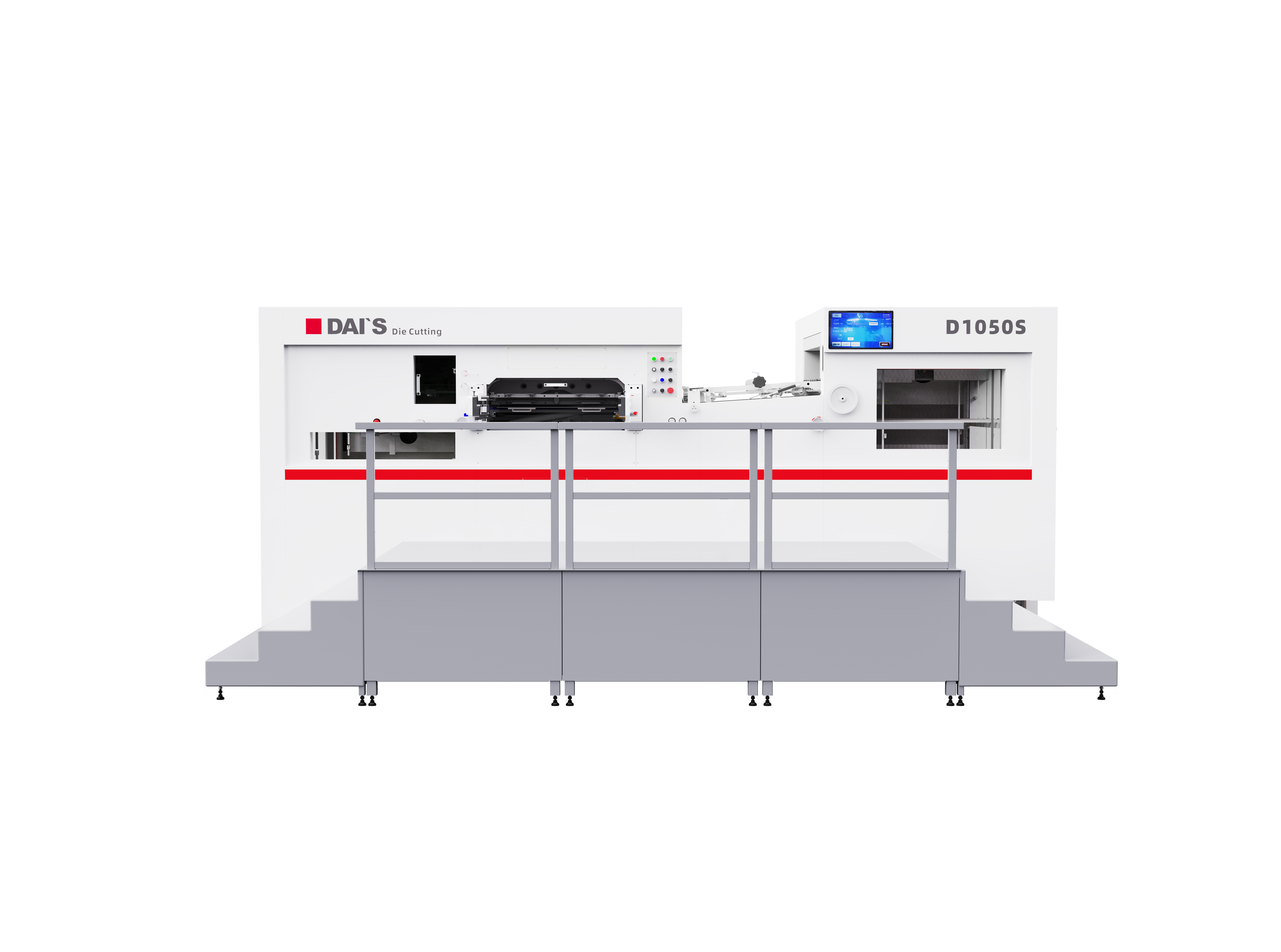
How a Precision Embossing Die Cutting Machine Prevents Material Failure
Commercial production relies on advanced technological mechanisms to mitigate paper stress. A modern Embossing Die Cutting Machine utilizes rigid cast-iron frames, precision-ground platens, and automated control systems to manage the physical forces exerted on the substrate. These machines address the root causes of cracking through exact mechanical control, removing the variability of manual operation.
Tonnage Control and Micro-Calibration
Applying the correct amount of force requires extreme precision. A heavy duty die cutting machine allows operators to adjust pressure in micro-increments. This capability ensures the press delivers exactly enough tonnage to mold the paper without crushing the internal fiber structure. When you are dealing with 300 tons of cutting force, a fraction of a millimeter makes the difference between a perfect emboss and a destroyed sheet.
Uniform pressure distribution across the entire cutting and embossing bed prevents localized fiber tearing. Heavy-duty frames resist deflection. Deflection is the tendency of the machine metal to bend under extreme force. When a weak frame deflects, the center of the platen applies less pressure than the edges, forcing the operator to over-pack the center during make-ready. Rigid cast-iron architecture eliminates this variance, ensuring the die engages the paper evenly across every square inch of the impression area.
Dwell Time Management
Dwell time refers to the exact duration the paper remains under maximum pressure between the dies. Instantaneous impact shocks the paper fibers, causing them to snap before they can deform. Paper is a viscoelastic material; it needs time to flow into a new shape.
Programmable dwell times allow the machine to pause at the point of maximum compression. This brief hold allows the cellulose fibers to stretch, relax, and mold into the contours of the die cavity. Extending the dwell time by even 0.2 seconds significantly reduces the mechanical shock. This feature is non-negotiable when executing deep impressions on heavy stocks. It allows the material to take a permanent set without rupturing the surface coating.
Heat Application Capabilities
Temperature plays a massive role in material flexibility. Heated platens transfer controlled thermal energy directly into the dies. This heat softens the paper fibers, internal binders, and surface coatings. Cold embossing relies entirely on mechanical force, which often exceeds the tensile strength of the paper.
Controlled heat reduces the mechanical force required to achieve deep impressions. By warming the substrate to temperatures between 150°F and 250°F, the fibers become pliable. Coatings that would normally crack under cold pressure stretch seamlessly into the die cavity. Operators can adjust the temperature based on the specific synthetic laminates or natural fibers present in the stock. Heat also helps set the paper fibers in their new position, reducing the "bounce back" effect that flattens out cold-embossed designs over time.
Evaluating Equipment: Selecting the Right Architecture for Your Workflow
Choosing the correct machinery requires analyzing production outcomes, scalability, and material compatibility. Different machine architectures handle pressure and substrate feeding in fundamentally different ways. Matching the equipment to the specific demands of your workflow ensures maximum yield and minimal material failure. You must look beyond the spec sheet and understand how the machine interacts with the substrate on the shop floor.
Flatbed Die Cutting Machine vs. Rotary Systems
The primary distinction between architectures lies in pressure dynamics. A flatbed die cutting machine applies even, simultaneous pressure across the entire sheet. The platen closes parallel to the bed, engaging all tooling at the exact same moment. This simultaneous engagement locks the sheet in place, preventing material shift and allowing for extended dwell times. Flatbeds are the industry standard for thick folding cartons, rigid boxes, and complex multi-level embossing jobs.
Rotary systems utilize cylindrical dies that apply continuous, localized pressure along a narrow contact line as the sheet feeds through the rollers. While rotary systems excel at high-speed, continuous runs for thinner materials like labels or flexible packaging, they struggle with deep 3D embossing on heavy cardstocks. The rolling action pushes the fibers forward, increasing the risk of cracking on thick substrates. Flatbed architecture remains superior for deep, crack-free embossing on rigid materials because it eliminates this forward shear stress.
The Role of an Automatic Embossing Die Cutter in High-Volume Runs
Manual feeding introduces human error, leading to inconsistent registration and improper feed angles. An automatic embossing die cutter eliminates these variables through precise mechanical control. When running 5,000 sheets an hour, you cannot rely on a human operator to hit the exact same guide pins every single time.
Automation maintains consistent pressure and exact registration over thousands of impressions. Automated sheet feeding mechanisms utilize optical sensors, side lays, and servo motors to align every single sheet perfectly before the gripper bars pull it into the platen. This precision alignment reduces the risk of off-grain embossing. Ensuring the paper enters the press at the exact same angle every time prevents the unpredictable fiber stress that causes random cracking throughout a production run.
Feature-to-Outcome Matrix
Understanding how specific machine components translate to production results simplifies the evaluation process. The following matrix maps hardware features directly to the elimination of paper cracking on the shop floor.
Equipment Feature Impact Analysis
| Machine Feature | Mechanical Function | Direct Outcome on Substrate |
| Cast-Iron Frame Construction | Prevents platen deflection under high tonnage. | Eliminates uneven pressure; prevents localized edge cracking. |
| Motorized Micro-Calibration | Adjusts pressure in fractions of a millimeter. | Prevents fiber crushing from over-pressurization. |
| Programmable Dwell Timers | Holds the platen closed at maximum pressure. | Allows fibers to stretch into deep cavities without snapping. |
| Heated Platen Beds | Transfers thermal energy to the tooling. | Softens fibers and coatings, reducing required mechanical force. |
| Automated Servo Registration | Aligns the sheet perfectly before impression. | Prevents off-grain stress and maintains structural integrity. |
| Heavy-Duty Gripper Bars | Secures the sheet during the entire press cycle. | Prevents micro-shifting that causes double impressions and tearing. |
Process Mitigation: Tooling, Make-Ready, and Material Selection
Upgrading equipment provides the mechanical foundation for flawless production, but operational realities dictate the final result. Machine capabilities must pair with exact tooling tolerances, strategic make-ready procedures, and strict environmental controls to guarantee success. A million-dollar press will still crack paper if the operator uses the wrong counter-die or ignores the grain direction.
Selecting the Right Paper Substrate and Feed Direction
Substrate selection dictates the baseline risk of material failure. Operators must evaluate paper stock based on grain direction relative to the primary fold or emboss line. Long grain paper has fibers running parallel to the long edge of the sheet. Short grain paper has fibers running parallel to the short edge. Deep embossing must run parallel to the grain direction whenever possible to allow the fibers to roll rather than snap. If a client submits a design that forces a heavy emboss against the grain, you must warn them about the high probability of cracking.
Feed direction directly impacts initial stress. Running the primary deep emboss edge parallel to the cylinder or platen edge minimizes the initial mechanical shock on the sheet. You want the press to engage the heaviest part of the die evenly.
Paper coatings also alter flexibility. Aqueous coatings, UV finishes, and synthetic laminates react differently to pressure. Rigid UV coatings often crack before the underlying paper fibers fail. Selecting substrates with flexible, elastomer-based coatings improves crack resistance during deep 3D impressions. Uncoated cotton-based papers offer the highest stretch potential for extreme embossing depths.
Die Tolerances, Shimming, and Ejection Materials
Standard magnesium dies lack the durability and precision required for deep, crack-free impressions. They are chemically etched, leaving rough microscopic edges. Custom-tooled CNC brass or copper dies feature smooth, beveled edges that gently ease the paper into the cavity, preventing the sharp shear forces that cause tearing. Brass also retains and transfers heat far better than magnesium.
The make-ready process compensates for microscopic variations in the platen and tooling. Operators build an accurate make-ready using precision metal shims (often 0.001" or 0.002" steel tape) to increase pressure in specific low spots. Phenolic counters provide a rigid, exact mirror of the male die. Pouring a liquid fiberglass counter directly on the press ensures a perfect custom fit for the specific caliper of the paper being run.
Embossing rubber mats, also known as ejection rubber, play a massive role in pressure relief. Placing specific densities of ejection rubber (e.g., 65 Shore A hardness) around high-stress points controls how the paper draws into the die. The rubber holds the surrounding sheet flat, preventing wrinkles and isolating the stretch strictly to the embossed area. Without proper ejection rubber, the paper pulls from the edges, causing severe distortion and eventual tearing.
Environmental Controls and Conditioning
A climate-controlled production environment acts as the industrial equivalent of misting, without the catastrophic side effects. Paper acts as a hygroscopic material, constantly absorbing or releasing moisture to reach equilibrium with the surrounding air. You cannot run a high-end finishing department in a warehouse with fluctuating weather conditions.
Pressrooms must maintain 45-55% relative humidity (RH). Dropping below 40% RH causes the cellulose fibers to dry out, shrink, and become brittle, guaranteeing cracking on deep impressions. Spiking above 60% RH causes excessive swelling, leading to wavy edges and registration failures. Proper paper conditioning requires bringing the wrapped skids into the pressroom 24 to 48 hours before the run. This allows the substrate to acclimate to the optimal humidity level while still under the pressure of the skid wrapping, preventing the edges from curling before they hit the feeder.
Cost vs. Value: Justifying the Investment in Professional Equipment
Transitioning to professional-grade machinery requires significant capital expenditure. Framing this financial trade-off requires analyzing the hidden costs of current operations against the measurable value of increased throughput and reduced waste. You are not just buying a machine; you are buying predictability and yield.
Calculating Waste Reduction and Throughput
Calculating the return on investment relies on tracking spoilage, rejected runs, and setup times. Entry-level machines often require 15% to 20% overruns to guarantee enough acceptable pieces for the final delivery. When running expensive foil-laminated boards or heavy cotton stocks, that waste destroys job profitability.
A precision machine reduces spoilage to low single digits. Calculate the monthly cost of wasted premium substrates, the labor hours spent sorting cracked sheets from acceptable ones, and the cost of reprinting rejected runs. Factor in setup times. Automated machines feature quick-lock chases, centerline registration systems, and digital pressure memory. These features reduce make-ready times from hours to minutes. The combined savings in material and labor rapidly offset the equipment cost by increasing the number of sellable sheets produced per shift.
Trade-offs Between Entry-Level and Commercial Systems
Cheap machinery carries massive hidden costs. Lightweight frames require constant make-ready adjustments because the metal flexes differently as the machine heats up during a run. This instability leads to manual shimming errors, high scrap rates, and unpredictable production schedules. Operators spend more time fighting the press than running production.
The upfront capital expenditure of commercial equipment buys predictability. Heavy-duty frames hold their tolerances. Automated feeders eliminate misregistration. Programmable dwell times remove the physical limitations of the substrate. The trade-off replaces constant operational firefighting with reliable, scalable manufacturing capacity. You gain the ability to take on complex, high-margin jobs that competitors with inferior equipment simply cannot produce without cracking the sheet.
Conclusion
While environmental factors like humidity and grain direction play a foundational role, consistent, crack-free embossing ultimately relies on precise pressure management, proper sheet sizing, and exact tooling control. Manual workarounds cannot replace the mechanical stability required to stretch cellulose fibers without breaking them. You need the right iron on the floor to control the physics of the paper.
Selecting the right machine depends on your specific volume and material requirements. High tonnage capacity and programmable dwell control are mandatory for deep impressions. Flatbed architectures provide the simultaneous pressure needed for heavy cardstocks, while automation guarantees the registration accuracy required for high-volume runs.
To eliminate paper cracking in your workflow, take the following steps:
- Audit your current scrap rates to quantify the exact financial cost of paper cracking and rejected runs over the last quarter.
- Request material test runs from equipment manufacturers using your specific substrates and most complex die designs.
- Schedule a technical demo to evaluate platen rigidity, dwell time programmability, and automated registration features in real-time.
- Implement strict humidity controls in your pressroom, targeting a constant 45-55% relative humidity.
FAQ
Q: Why does paper crack only on one side of an embossed design?
A: One-sided cracking usually results from uneven pressure distribution across the platen or improper shimming during the make-ready process. It can also occur if the design runs across the paper grain rather than parallel to it, causing the fibers on the high-stress edge to rupture while the parallel side stretches safely.
Q: Can paper overhang or an overly thick stack cause creasing and cracking?
A: Yes. Exceeding the machine's optimal platen area leaves the edges unsupported, creating severe pinch points. An overly thick stack exceeds the die clearance tolerance, forcing the material beyond its tensile limits and causing immediate edge cracking and structural creasing.
Q: Why shouldn't I just mist my paper with water to prevent cracking?
A: Direct water application causes uneven fiber swelling, leading to severe paper warping. Once the paper warps, it loses structural stability, causing misregistration on subsequent press passes. Ambient humidity control remains the only viable commercial solution for maintaining fiber elasticity.
Q: Can a flatbed die cutting machine handle deep 3D embossing without tearing the paper?
A: Yes. Flatbed machines apply uniform, simultaneous pressure across the entire sheet. Combined with programmable dwell times and proper make-ready rubber, this architecture allows the paper fibers to stretch and mold into deep 3D cavities without experiencing the shear stress that causes tearing.
Q: What is the ideal paper humidity for embossing and die cutting?
A: The ideal pressroom environment should maintain 45-55% relative humidity. This specific range ensures the cellulose fibers retain enough moisture to remain highly elastic and stretch under pressure, without absorbing so much moisture that the sheet warps or loses its structural rigidity.
Q: How does a heavy duty die cutting machine differ from standard commercial models?
A: Heavy-duty models feature massive cast-iron frames designed to resist deflection under extreme tonnage. Standard models may bend slightly in the center under high pressure, leading to uneven impressions. Heavy-duty machines maintain absolute parallel platen closure, ensuring uniform pressure across the entire die surface.


