The packaging market is experiencing a massive shift driven by the rising demand for custom boxes, folding cartons, and corrugated shipping materials. Brands require unique structural designs to stand out on shelves and optimize logistics. To meet this demand, packaging producers must evaluate their equipment investments carefully. A core component of this production line is the equipment used to cut, crease, and shape substrates. Understanding the true operational value and expected return on investment of this machinery is essential for scaling operations efficiently.
The investment spectrum for packaging equipment varies wildly. Depending on automation levels, format size, and tonnage, the die cutting machine price can range from a modest capital expenditure for small shops to a major infrastructure investment for industrial plants. This guide helps packaging businesses, commercial printers, and manufacturing startups calculate the operational value and production capabilities of different equipment tiers. You will learn how to match machine specifications with your daily output requirements to maximize profitability.
Quick Reference: Cost Tiers for Packaging Die Cutting Machines
Navigating the equipment market requires categorizing machines by their production intent. Manufacturers design different models to serve specific operational scales, from boutique prototyping to continuous industrial output. Understanding these tiers helps you align your budget with realistic production goals without relying on exact pricing, which fluctuates based on global supply chains and custom configurations.
| Machine Tier |
Primary Application |
Automation Level |
Ideal User |
| High-End Consumer & Prosumer |
Prototyping, low-volume mockups |
Manual feed and operation |
Design studios, boutique craft shops |
| Entry-Level Benchtop |
Short-run paper boxes, envelopes |
Manual feed, motorized cutting |
Small commercial printers |
| Mid-Range Semi-Automatic |
Medium-volume folding cartons |
Manual feed, automatic cutting/delivery |
Growing regional packaging providers |
| Fully Automatic Industrial |
High-volume corrugated and rigid boxes |
Fully automated feed, cut, strip, deliver |
Large-scale manufacturing plants |
High-End Consumer and Prosumer Models
These compact units serve low-intensity, small-run applications. They work best for structural design prototyping and boutique, in-house custom packaging. Prosumer models require manual feeding and operate at slower speeds. They offer a low barrier to entry but lack the durability for continuous daily manufacturing. Operators must manually align each sheet, which introduces a high margin for human error during extended runs.
Entry-Level Benchtop and Small-Format Machines
Small commercial operations often start with benchtop equipment. These machines handle small paper boxes, folding cartons, and short-run commercial print finishing. They provide a step up in precision and speed compared to prosumer models. Benchtop units offer a cost-effective solution for businesses testing new packaging lines without committing to large floor-standing equipment. They typically utilize standard 110V or 220V single-phase power, making installation straightforward.
Mid-Range Semi-Automatic Die Cutters
Growing regional packaging providers usually transition to semi-automatic systems. These machines require an operator to feed sheets manually, but the cutting and delivery processes are automated. They deliver faster cycle times and higher cutting pressure. Semi-automatic models bridge the gap between manual labor and full automation, offering robust performance for medium-volume runs. They feature heavier cast-iron frames to absorb the vibration of continuous cutting strokes.
Fully Automatic Industrial Machines
High-volume continuous manufacturing demands fully automatic systems. These heavy-duty machines feature automatic feeders, stripping stations, and continuous delivery systems. They process thousands of sheets per hour with minimal operator intervention. Investing in this tier requires significant capital but drastically reduces the labor cost per unit produced. These systems require dedicated infrastructure, including reinforced concrete floors and three-phase electrical drops.
Deep Dive into Machine Categories and Capabilities
Selecting the right equipment means looking beyond the initial investment and examining the specific capabilities of each category. Every machine tier presents distinct use cases, advantages, and limitations based on its engineering.
High-End Consumer and Prosumer Units
Prosumer units fit perfectly into design studios and localized craft businesses. Operators use them to create packaging mockups and low-volume carton prototypes. They allow designers to test structural integrity before ordering large production runs. However, these units have strict limitations. They struggle with thick materials, require constant manual feeding, and operate at speeds unsuitable for fulfilling large commercial orders. The cutting pressure is often generated by simple hand-cranked rollers or lightweight motors.
Entry-Level Benchtop Machines for Small Paper Boxes
Benchtop machines provide affordable, short-run packaging capabilities. They excel at processing small paper boxes, custom envelope lines, and lightweight folding cartons. Key capabilities include handling cardstock, thin folding boards, and standard kraft paper. Their compact footprint makes them ideal for small commercial print shops with limited floor space. While they lack the tonnage for heavy corrugated board, they offer excellent registration for intricate lightweight packaging.
Industrial and Automatic Die-Cutting Machines
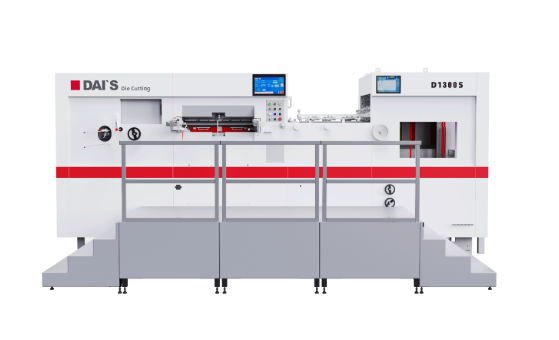
Industrial systems dominate high-capacity folding carton and corrugated shipping box production. Market trends show a distinct shift toward highly automated, continuous-feed systems to offset rising labor shortages. These machines feature precision registration systems that ensure perfect alignment between printed graphics and cut lines. They include inline stripping units to remove waste material automatically. High tonnage capacity allows them to punch through heavy-gauge corrugated boards and rigid packaging substrates effortlessly.
- Feeder Setup: Operators adjust suction heads and side lays to accommodate the specific caliper of the substrate.
- Registration Alignment: Optical sensors or mechanical push/pull guides ensure the printed sheet aligns perfectly with the cutting die.
- Platen Pressure Adjustment: Technicians dial in the exact tonnage required to cut cleanly through the material without damaging the steel cutting plate.
- Stripping Pin Configuration: For machines with inline stripping, operators position male and female stripping pins to punch out waste areas automatically.
- Delivery Stacking: The machine automatically jogs and stacks the finished blanks onto a pallet for easy removal.
Key Factors Influencing Equipment Investment
Several mechanical and operational factors dictate the final investment required for packaging equipment. Understanding these variables ensures you do not overpay for unnecessary features or under-equip your facility.
Level of Automation
Automation is the primary driver of equipment costs. Manual machines rely entirely on operator speed. Semi-automatic machines automate the cutting stroke but require manual feeding. Fully automatic systems handle feeding, cutting, stripping, and blanking without stopping. As automation increases, labor dependency decreases, allowing facilities to scale production output predictably. Automated systems also feature advanced PLC controls and touchscreen interfaces for rapid job changeovers.
Machine Format and Cutting Area
The maximum sheet size a machine can process directly impacts its footprint and engineering complexity. Small desktop footprints handle localized, single-up designs. Large-format flatbed and rotary systems process multiple packaging blanks on a single large sheet. Upscaling the format size requires heavier cast iron frames, larger cutting platens, and more powerful drive motors. A larger format allows for more "ups" per sheet, drastically increasing hourly yield.
Material Versatility and Tonnage
Tonnage refers to the sheer pressure the machine applies during the cutting stroke. Cutting thin paper requires minimal pressure. Punching through heavy corrugated board, dense plastics, foam, and thick solid boards demands immense tonnage. Machines engineered for high tonnage feature reinforced structural components and powerful hydraulic or mechanical drive systems, which elevate the overall equipment value. Insufficient tonnage results in incomplete cuts and frayed edges.
Manufacturer Reputation and Support
Sourcing equipment from tier-one global brands carries a premium compared to unbranded imports. However, established manufacturers provide reliable warranties, immediate parts availability, and rapid technician dispatch. Downtime in a packaging plant destroys profit margins. Investing in a reputable Die Cutting Machine ensures consistent production and long-term operational stability. Look for manufacturers that offer comprehensive preventative maintenance schedules and remote diagnostic capabilities.
Beyond the Machine: Operational Overhead and Tooling
Acquiring the machinery is only the first step. Running a profitable packaging line requires calculating the ongoing expenses associated with tooling, production dynamics, and facility maintenance.
Initial Tooling and Custom Dies
Every unique box design requires physical tooling. Steel rule dies consist of cutting blades bent into shape and set into a wooden board. Rotary dies feature curved cutting plates mounted on cylinders. The complexity of the package geometry dictates the tooling setup. Intricate designs with multiple folds, windows, and locking tabs require highly specialized, precision-made dies, adding to the setup overhead for every new product line. Proper storage of these dies is critical to prevent warping and blade damage.
Production Run Dynamics
Order scale determines your unit economics. Running a few hundred custom boxes yields a higher relative cost per part due to setup time and tooling expenses. Conversely, securing annual accounts for millions of identical cartons justifies running high-speed automatic machinery. High-volume production spreads the initial setup overhead across thousands of units, reducing the operational expense per part significantly. Efficient job scheduling minimizes downtime between different production runs.
Maintenance and Consumables
Industrial equipment requires regular maintenance to maintain cutting accuracy. Operators must frequently replace consumable items like cutting jackets, matrixes, and ejection rubbers. Heavy-duty machines also draw substantial electrical loads, requiring industrial-grade three-phase power systems. Furthermore, allocating labor for specialized operator training ensures the machinery runs safely and efficiently, minimizing material waste. Daily lubrication of moving parts and weekly inspection of hydraulic lines prevent catastrophic failures.
- Inspect and replace worn ejection rubber to prevent sheets from sticking to the die.
- Check the cutting platen for uneven wear and perform make-ready adjustments as needed.
- Lubricate all main drive chains and feeder mechanisms according to the manufacturer's schedule.
- Clean optical sensors and registration guides to maintain accurate sheet alignment.
Business Case: In-House vs. Outsourced Production
Many growing brands and commercial printers face the decision of whether to bring packaging production in-house or continue outsourcing to trade converters. This decision hinges on volume, control, and capital availability.
The Threshold for In-Sourcing
Outsourcing makes sense for low-volume, infrequent packaging needs. However, as monthly order volumes grow, the margins lost to outsourced vendors compound. Calculating the in-sourcing threshold involves comparing your monthly outsourcing invoices against the monthly operational expenses of running an in-house machine. Once internal production becomes more profitable, acquiring dedicated equipment is the logical next step. You must also factor in the cost of floor space and dedicated operators.
Turnaround Time and Quality Control
In-house production offers unparalleled control over lead times. Relying on external vendors leaves you vulnerable to their scheduling conflicts and shipping delays. Owning the equipment allows for immediate prototyping, faster delivery times, and strict quality control. You can inspect the first article immediately and make tooling adjustments on the fly, ensuring the final packaging meets exact client specifications. This agility often wins contracts over competitors relying on third-party converters.
Assessing Budget Constraints
Small businesses must scale strategically. Jumping directly to a fully automated industrial system can over-leverage cash flow. A practical strategy involves starting with a reliable benchtop or semi-automatic setup to capture immediate margins. As contract volumes stabilize and revenue increases, businesses can trade up to faster, automated systems without jeopardizing their financial stability. Leasing options and phased equipment acquisitions help manage initial capital outlays.
Buying Guide: How to Choose the Right Machine
Selecting the correct equipment requires matching machine specifications with your facility's physical constraints and your clients' packaging demands. Use this framework to evaluate potential machinery.
Define Your Primary Substrates
Identify the exact materials you process most frequently. If your primary output is thin cosmetic cartons, a lighter-tonnage machine with high-speed registration is ideal. If you manufacture heavy corrugated shipping boxes, you must prioritize maximum tonnage and robust feeding systems capable of handling warped or thick boards. Attempting to run E-flute corrugated through a machine designed only for SBS board will result in constant jams and crushed flutes.
Determine Volume Projections
Match your daily output needs with the machine’s rated cycles per hour (CPH). Calculate your peak seasonal demand rather than your average weekly output. Ensure the machine can handle your busiest production months without requiring excessive overtime shifts. Factoring in setup times between different jobs will give you a realistic view of actual daily throughput. A machine rated for 7,000 CPH may only average 4,500 CPH when accounting for make-ready and pallet changes.
Evaluate Space and Power Restraints
Industrial machinery demands significant infrastructure. Measure your available floor space, including the clearance needed for loading raw materials and removing finished pallets. Verify your facility's concrete slab can support the machine's weight. Confirm that your electrical panels can supply the necessary voltage and amperage required by heavy-duty drive motors. You also need adequate compressed air lines to run pneumatic feeder and delivery systems.
Post-Sales Service Checklist
Before finalizing any equipment acquisition, interrogate the supplier's post-sales support infrastructure. Ask specific questions about operator training programs during installation. Verify the location of their nearest spare parts depot. Understand their guaranteed response times for dispatching field service technicians during unexpected breakdowns. A machine is only as good as the service network standing behind it.
Conclusion
Investing in packaging equipment requires a thorough understanding of your production needs, facility capabilities, and long-term growth strategy. By carefully evaluating the different machine tiers and matching them to your specific substrates and volume requirements, you can build a highly efficient and profitable production line.
- Audit your current monthly outsourcing expenses to determine your exact in-sourcing threshold.
- Measure your facility's floor space, concrete thickness, and electrical capacity before evaluating industrial models.
- Request physical material tests from equipment manufacturers using your specific substrates and die designs.
- Establish a preventative maintenance schedule and secure a reliable source for consumable parts like ejection rubber and cutting jackets.
FAQ
Q: What is the difference between a flatbed and a rotary die cutter?
A: Flatbed machines press a flat steel rule die onto the substrate, offering high precision for complex folding cartons. Rotary machines use cylindrical dies that roll over the material, providing significantly faster continuous speeds ideal for high-volume corrugated box production.
Q: Can one machine cut both thin paper and thick corrugated board?
A: While some versatile machines handle a range of materials, extreme differences require specialized equipment. Cutting thin paper requires delicate registration, whereas thick corrugated board demands high tonnage. Using a heavy-duty machine for lightweight paper often results in feeding issues.
Q: How long does a steel rule die typically last?
A: The lifespan of a steel rule die depends on the substrate being cut. Cutting soft paperboard allows a die to last for hundreds of thousands of impressions. Abrasive materials or recycled boards dull the blades faster, requiring frequent re-ruling.
Q: Does semi-automatic equipment require specialized operator training?
A: Yes. While semi-automatic machines are simpler than fully automatic lines, operators must understand how to set cutting pressure, align the registration guides, and safely hand-feed sheets to prevent jams and maintain consistent quality.
Q: What facility upgrades are usually needed for industrial die cutters?
A: Industrial machines typically require reinforced concrete floors to handle extreme weight and vibration. They also need dedicated three-phase electrical drops, compressed air lines for pneumatic systems, and ample floor space for material handling equipment.
Q: How do I prevent corrugated boards from crushing during the cutting process?
A: Preventing crushed flutes requires precise platen pressure adjustment and the correct selection of ejection rubber. Operators must use softer rubber profiles near the creasing rules and ensure the cutting blades are perfectly leveled during the make-ready process.


