High-volume packaging environments face compounding costs when production bottlenecks occur on the floor. Relying on manual or outdated cutting processes severely limits throughput, creating a hard ceiling on your operational capacity. Slow cycle times, inconsistent tolerances, and high material waste directly erode profit margins and delay time-to-market. When components fail to meet exact specifications, the entire assembly line suffers from unplanned downtime, machine jams, and increased rejection rates.
Integrating an automated Die Cutting Machine standardizes output, reduces labor dependencies, and scales packaging operations. Upgrading from legacy systems to modern automated equipment shifts the focus from managing variable labor inefficiencies to maximizing predictable machine output. This transition allows facilities to handle complex structural designs and larger production runs without sacrificing precision or speed. You stop fighting the equipment and start hitting your daily production targets.
- Automated die cutting machines drastically reduce per-unit cycle times compared to manual or legacy cutting methods.
- Selecting the right equipment (rotary, flatbed, or digital) depends on run volume, material thickness, and required changeover frequency.
- Precision die cuts lower downstream manufacturing costs by simplifying assembly processes (e.g., pre-scored folds, integrated pull tabs, kiss-cut liners).
- Successful implementation requires evaluating tooling costs, operator training, and facility footprint against projected throughput gains.
The Cost of Inefficiency in Packaging Production
Identifying Throughput Bottlenecks
Manual cutting processes and aging equipment introduce severe operational limitations on the shop floor. Operator fatigue naturally leads to slower processing speeds as shifts progress, creating unpredictable daily yields. Legacy machines often lack the continuous feed mechanisms found in modern systems, requiring frequent stops for material loading, alignment, and manual stripping. These speed constraints prevent facilities from taking on larger orders or meeting tight fulfillment deadlines.
Inconsistent cuts directly impact quality control. When tolerances drift, rejection rates spike. Material waste accumulates rapidly when operators must discard improperly cut sheets or rolls. In high-volume environments, even a minor alignment issue can ruin hundreds of blanks before the error is caught at the delivery end, driving up raw material consumption and extending project lead times. You end up paying for board that goes straight into the recycling baler.
Furthermore, older equipment often struggles with modern substrate variations. Recycled boards behave differently than virgin kraft, often requiring higher cutting pressure or specialized rubbering on the die. When a legacy machine cannot adapt to these material changes, operators spend hours adjusting make-ready tape, shim sheets, and cutting plates just to get a clean strike. This excessive setup time eats directly into available production hours.
The Downstream Impact of Poor Cutting
Imprecise packaging components cause a ripple effect across the entire manufacturing floor. When box blanks, inserts, or labels lack exact dimensions, assembly time on the fulfillment line increases. Workers spend extra seconds forcing misaligned tabs into slots or dealing with incomplete perforations. These micro-delays accumulate, drastically reducing the number of units packed per hour.
Upgrading to automated cutting systems presents a clear operational advantage. It shifts the production model from variable labor costs to fixed, predictable machine output. Standardized components ensure that downstream automated folders and gluers run without jamming. By eliminating the variability of manual handling, operations managers can accurately forecast production schedules and labor requirements.
Consider the impact on automated folder-gluers. A folder-gluer running at 300 meters per minute requires perfectly cut and scored blanks. If a die cut is off by even a millimeter, or if a score line is too shallow, the blank will skew as it travels through the belts. This leads to machine crashes, wasted adhesive, and ruined product. Precision cutting at the source prevents these downstream catastrophes.
Core Mechanisms: How a Die Cutting Machine Accelerates Output
High-Speed Repetition and Cycle Time Reduction
Baseline throughput metrics reveal a stark contrast between manual processes and automated equipment. While manual or semi-automatic methods might process a few hundred sheets per hour, an industrial packaging die cutting machine can handle thousands of units in the same timeframe. This increase in speed fundamentally changes production capacity.
Continuous feed mechanisms and automated material handling eliminate idle machine time. Modern systems pull substrates from large rolls or high-capacity sheet feeders, execute the cut, and eject the finished pieces without human intervention. This continuous motion ensures the cutting die remains engaged, maximizing the number of strokes or rotations per minute and significantly reducing the per-unit cycle time.
Advanced feeder heads utilize suction cups and air blasts to separate sheets reliably, even when dealing with static-prone plastics or warped corrugated boards. By maintaining a consistent stream of material into the cutting section, the machine avoids the micro-stops that plague older, manually fed platens. Operators can load new pallets of raw material into the pre-loader while the machine is still running the previous stack.
Material Optimization and Waste Reduction
Precise nesting and automated layout planning maximize material yield per sheet or roll. Engineering software calculates the most efficient arrangement of custom shapes, minimizing the negative space between cuts. This tight nesting ensures that facilities extract the maximum number of usable blanks from every square inch of substrate.
Reducing scrap in high-volume corrugated or carton board runs yields substantial financial benefits. When processing expensive specialty boards or multi-layered substrates, minimizing offcuts directly lowers raw material expenditure. Automated stripping stations further enhance efficiency by mechanically removing waste material from the finished blanks, sending clean, ready-to-assemble pieces directly to the delivery pile.
Blanking technology takes this a step further. Instead of delivering full sheets that require manual breaking with a hammer, modern machines use upper and lower blanking tools to push the finished cartons completely out of the waste matrix. The machine delivers perfectly stacked, counted bundles of finished cartons, ready for immediate transport to the gluing department.
Precision Engineering for Custom Geometries and Complex Designs
Modern cutting technology handles intricate shapes and multi-layered packaging designs without reducing production speed. Advanced steel-rule dies and precision-machined rotary cylinders maintain exact tolerances, even when executing complex curves or sharp internal angles. This capability allows brands to design innovative packaging structures without worrying about manufacturing limitations.
Structural integrity is maintained across complex folds, tabs, and windows. By applying consistent pressure across the entire cutting surface, the equipment ensures that creases are deep enough for easy folding but not so deep that they compromise the board's strength. This precision minimizes reject rates and ensures that the final assembled package performs reliably in transit.
The use of specialized ejection rubber on the die board plays a critical role here. Different densities of rubber are placed strategically around the cutting rules to hold the sheet flat during the cut and push it off the blade immediately after. This prevents the material from sticking to the die, which would cause jams and tear the delicate internal features of the packaging design.
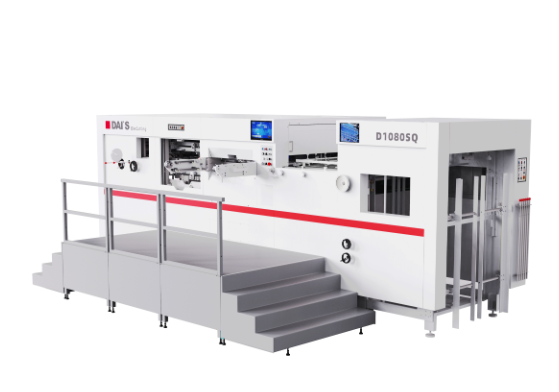
Evaluating Packaging Die Cutting Machine Technologies
Flatbed Die Cutting Machines
Flatbed systems utilize a stamping motion, pressing a flat steel-rule die into the substrate. They are best suited for thick materials, complex structural designs, and short-to-medium runs. The flatbed configuration accommodates heavy corrugated boards, thick foam inserts, and rigid plastics that might resist bending around a cylinder.
While their efficiency profile is slower than rotary alternatives, flatbeds offer lower tooling costs. Steel-rule dies are relatively inexpensive to manufacture and modify. This makes flatbed machines highly effective for intricate packaging designs where precision is critical, and production volumes do not justify the investment in solid rotary tooling.
Make-ready on a flatbed involves patching the cutting plate with thin strips of tape to balance the cutting pressure perfectly across the entire sheet. Skilled operators can dial in a flatbed to cut through a sheet of paperboard while barely scratching the steel plate underneath. This level of control is essential for high-end cosmetics or pharmaceutical packaging.
Rotary Die Cutting Machines
Rotary systems operate using a continuous cylindrical motion. The substrate feeds between a rotating cutting cylinder and an anvil cylinder. This technology is best for high-volume, continuous runs of standard packaging, such as corrugated shipping boxes or folding cartons.
The efficiency profile of rotary equipment is defined by exceptional speed. Because the motion is continuous rather than reciprocating, rotary machines can process web-fed or sheet-fed materials at massive velocities. They are ideal for mass production where the higher initial tooling costs of machined cylinders can be amortized over hundreds of thousands of units.
Rotary dies are often made of curved wood or fiberglass with steel rules inserted, or they can be solid engraved metal cylinders for extreme precision and longevity. The anvil cylinder is typically covered in a replaceable polyurethane blanket. Managing the wear on this blanket is a key maintenance task, as an uneven anvil will result in incomplete cuts and hanging waste.
Digital Die Cutting Machines
Digital systems replace physical dies with computer-controlled lasers or oscillating blades. They are best for prototyping, custom packaging, and short runs requiring frequent changeovers. Digital cutting eliminates the wait times associated with ordering and installing physical tooling.
The efficiency profile centers on setup reduction. Operators can switch between entirely different jobs simply by loading a new vector file. While the per-unit cutting speed is lower than rotary or flatbed systems, the elimination of physical tooling setup times allows for immediate job switching, making digital machines highly efficient for high-mix, low-volume production environments.
These tables often feature vacuum zones to hold the material securely in place while the cutting head moves rapidly across the surface. Camera registration systems read printed fiducial marks on the substrate, automatically adjusting the cutting path to compensate for any print shift or material distortion.
Future-Proofing: The Transition from Legacy Mechanical to Hybrid Systems
Manufacturing facilities increasingly adopt hybrid systems that integrate digital toolpaths with physical tooling. These advanced machines handle variable data and short-run customization alongside high-speed mechanical cutting. A hybrid approach allows operations to utilize a single machine for both rapid prototyping and full-scale production runs, maximizing equipment utilization and floor space efficiency.
| Technology Type | Best Suited For | Speed Profile | Tooling Requirement |
| Flatbed | Thick materials, complex designs, medium runs | Moderate (Stamping motion) | Steel-rule dies (Lower cost) |
| Rotary | High-volume, continuous standard packaging | Very High (Continuous motion) | Machined cylinders (Higher cost) |
| Digital | Prototyping, short runs, frequent changeovers | Lower per-unit speed | None (Laser or programmable blade) |
Downstream Efficiency: Beyond the Cut
Depth Control Engineering: Kiss-Cutting vs. Thru-Cutting for Rapid Assembly
Precise depth control dictates how components behave during final assembly. Kiss-cutting involves slicing through the face material while leaving the backing liner completely intact. Thru-cutting, conversely, punches entirely through all layers of the substrate. Both techniques serve specific operational functions.
Custom liner features generated by precise depth control accelerate manual processes. Extended liners or back-slitting allow assembly line workers to peel and apply adhesive packaging components rapidly. When workers do not have to struggle to separate a label or adhesive strip from its backing, the overall assembly speed increases significantly.
Achieving a perfect kiss-cut requires immaculate machine calibration. If the pressure is too high, the blade scores the liner, causing it to snap when the automated labeling machine tries to dispense it. If the pressure is too low, the face material won't separate cleanly. Modern machines use micro-adjustment dials to control platen pressure down to the micron.
Streamlining Assembly and Fulfillment
Custom features like precise scoring, perforations, and pull tabs reduce the physical steps required to assemble packaging. A well-engineered crease allows a box to fold naturally into shape, eliminating the need for workers to force rigid board into alignment. Perforations ensure clean tears for retail-ready packaging displays.
These micro-efficiencies aggregate into massive labor reductions over a production shift. Saving a half-second per part using an integrated pull-tab may seem minor on a single unit. However, when multiplied across a run of fifty thousand units, that half-second translates to hours of saved labor, allowing fulfillment teams to process more orders per day.
Consider the design of a crash-lock bottom box. The die cutting machine must score the diagonal folds perfectly. If the scores are too stiff, the box won't pop open on the fulfillment line. If they are too weak, the bottom falls out when loaded with product. The die cutter dictates the success of the entire packaging design.
Integration with Inline Packaging Systems
Modern equipment rarely operates in isolation. Advanced machines integrate directly with inline printing, folding, and gluing equipment. This connectivity creates a seamless, single-pass production line where blank material enters one end and fully finished, glued, and folded packaging exits the other.
Inline integration eliminates the need to transport work-in-progress materials between different workstations. It reduces handling damage, minimizes the floor space dedicated to staging inventory, and ensures that the cutting speed perfectly matches the downstream gluing and folding capacity.
Implementation Realities and Adoption Risks
Tooling Costs and Setup Trade-offs
Evaluating the upfront cost of custom steel-rule dies or rotary cylinders against long-term per-unit savings is a critical step. Rotary tooling requires a larger initial outlay but offers unparalleled durability and speed for long runs. Flatbed dies are cheaper to procure but may require more frequent replacement if subjected to continuous, high-volume stress.
Calculating the break-even point requires analyzing production volume. High-volume runs quickly absorb the cost of expensive rotary cylinders, driving the per-unit cost down to fractions of a cent. Conversely, short runs or highly customized jobs benefit from the zero-tooling cost of digital systems, even if the per-unit cutting time is slightly longer.
Die maintenance is also a factor. Steel rules become dull over time and require re-knifing. Facilities must decide whether to maintain an in-house die shop or outsource repairs to a local diemaker. Having spare dies for critical, high-volume jobs prevents catastrophic downtime if a blade chips during a run.
Facility Footprint and Infrastructure
Industrial cutting equipment demands significant physical space. Operations managers must account for the machine's footprint, as well as the staging areas required for raw material infeed and finished product outfeed. Proper workflow design prevents bottlenecks around the machine.
Infrastructure upgrades are often necessary. Heavy-duty equipment requires specific power consumption parameters, robust pneumatic air supplies, and reinforced flooring to handle machine weight and vibration. Environmental controls, such as dust extraction systems, are also critical to maintain clean operating conditions when processing paperboard or corrugated materials.
| Infrastructure Requirement | Specification / Consideration |
| Power Supply | 3-phase industrial power, dedicated breakers |
| Pneumatics | Clean, dry compressed air for feeders and clutches |
| Floor Load | Reinforced concrete to handle 10,000+ lbs of static weight |
| Dust Extraction | Overhead vacuum systems to remove paper dust and trim |
Operator Training and Maintenance
Automated machinery requires skilled operators for setup, calibration, and troubleshooting. While modern interfaces simplify operation, operators must still understand material behavior, die alignment, and pressure adjustments to maintain quality. Investing in comprehensive training ensures the equipment operates at peak efficiency.
Standard preventative maintenance schedules are required to prevent costly unplanned downtime. Regular lubrication, sensor calibration, and anvil inspection keep the machine running smoothly. Neglecting maintenance leads to premature wear on tooling and internal components, ultimately degrading cut quality and slowing production.
Operators need to know how to read a die strike sheet. They must identify areas where the cut is too heavy or too light and adjust the make-ready accordingly. This tactile skill takes time to develop, making experienced die cutter operators highly valuable assets on the production floor.
Conclusion
Transitioning packaging production from a labor-intensive bottleneck to a scalable, predictable operation requires robust automation. Implementing precise cutting technology standardizes output, drastically reduces material waste, and accelerates downstream assembly. By shifting from manual variability to automated consistency, facilities can confidently handle higher volumes and complex structural designs.
The choice between flatbed, rotary, or digital systems must be dictated by the facility's specific mix of run lengths, material types, and changeover frequencies. High-volume, standardized runs demand the continuous speed of rotary systems. Complex, thick materials suit flatbed configurations, while high-mix, short-run environments benefit immensely from the flexibility of digital cutting.
Operations managers should take the following next steps:
- Conduct a thorough time-study of current cutting and assembly processes to establish an accurate baseline.
- Audit material waste logs to identify how much scrap is generated by manual or legacy cutting errors.
- Map out the facility floor to determine available footprint and infrastructure capacity for new equipment.
- Request physical equipment demonstrations using your specific substrates to verify speed and cut quality.
FAQ
Q: What is the average setup time for an industrial die cutting machine?
A: Setup times vary by technology. Digital systems require almost zero physical setup, needing only file loading and material alignment. Flatbed and rotary machines require physical die installation and pressure calibration, which can take anywhere from 15 to 45 minutes depending on the complexity of the job and operator skill.
Q: How does a packaging die cutting machine reduce material waste?
A: Advanced nesting software calculates the tightest possible layout for custom shapes, maximizing the number of blanks per sheet. Furthermore, automated precision eliminates human cutting errors, drastically reducing the number of rejected parts and discarded raw materials.
Q: Which is faster: rotary or flatbed die cutting?
A: Rotary cutting is significantly faster. It uses a continuous cylindrical motion to feed and cut material without stopping. Flatbed cutting uses a reciprocating stamping motion, which requires the material to pause momentarily for each strike, making it slower but better suited for thicker substrates.
Q: Do digital die cutting machines require physical tooling?
A: No. Digital machines do not use physical steel-rule dies or machined cylinders. Instead, they utilize computer-controlled lasers or programmable oscillating blades to execute cuts based on digital vector files, entirely eliminating tooling costs.
Q: What is the difference between kiss-cutting and thru-cutting in packaging production?
A: Kiss-cutting slices through the top layer of a material (like a label) while leaving the backing liner intact, allowing for easy peeling. Thru-cutting punches completely through all layers of the substrate to create individual, separated pieces.
Q: What materials can a packaging die cutting machine process?
A: Industrial machines can process a wide variety of substrates, including corrugated cardboard, folding carton board, rigid plastics, foam inserts, rubber, and adhesive-backed papers. The specific machine type determines the maximum material thickness it can handle.
Q: How do custom die cuts lower labor costs in packaging?
A: Precision cuts create perfect pre-scored lines, split liners, and integrated tabs. These features eliminate the need for workers to force materials into shape, speeding up the manual folding, gluing, and assembly processes on the fulfillment line.


