Introduction
Graphic design is an industry where a single millimeter makes the difference between a masterpiece and a mistake. For designers handling small batch runs—such as bespoke wedding invitations, premium business cards, or limited-edition zines—the finishing stage is often the most stressful. Relying on manual blades or shaky handheld cutters often leads to jagged edges and wasted expensive cardstock. This is exactly why an Electric paper cutter has transitioned from a luxury to a necessity for the modern creative studio.
An Automatic cutting solution does more than just slice through stacks; it provides the High precision required to maintain brand integrity across a series of printed materials. When we talk about "small batch runs," we refer to high-value, low-volume projects where every sheet counts. In this guide, we will explore how a Digital control system empowers designers to take full control of their post-press workflow, ensuring every cut is as sharp as the original digital file.
Achieving High Precision for Complex Branding Projects
In graphic design, the "bleed" and "trim" areas are sacred. If you are producing a batch of 50 luxury lookbooks, a manual guillotine might shift slightly under the pressure of the blade. An Electric paper cutter eliminates this human error by using mechanical clamping and programmed measurements.
The Importance of the Backgauge
The backgauge is the "wall" that holds your paper in place. On a High precision electric model, the backgauge moves via a motor rather than a hand crank. This ensures that if you set the cut to 148mm, it stays at exactly 148mm for every single stack. This level of consistency is vital for designers who need to ensure that double-sided prints align perfectly with the trim line.
Minimizing Paper Draw
"Paper draw" occurs when the top sheets of a stack are cut shorter than the bottom sheets because the blade pushes the paper forward. Heavy duty electric cutters use a vertical shear action and a powerful independent clamp to hold the paper flat. It prevents the stack from sliding, which is a common nightmare when working with slippery, coated gloss papers or thick 400gsm stocks.
Streamlining Workflow with Digital Control and LCD Displays
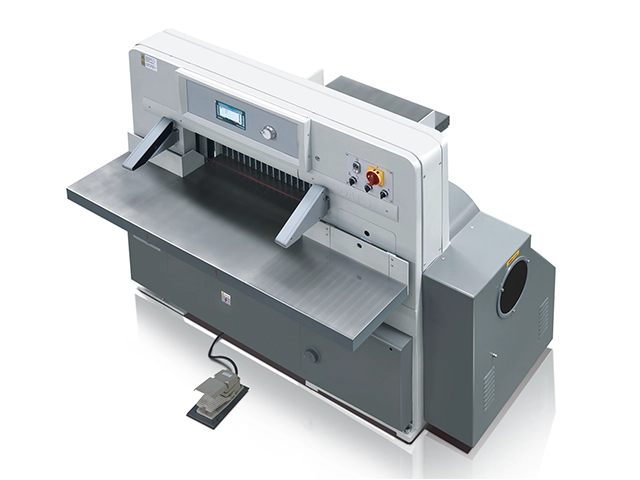
Time is money in a design studio. Spending three hours manually trimming a small batch of invitations is not a sustainable business model. An Electric paper cutter with Digital control turns a tedious task into a quick, repeatable process.
Programmable Memory Functions
Most modern units come with LCD display interfaces that allow you to store specific "cut programs." For example, if you frequently print A7 postcards on A3+ sheets, you can save that specific sequence of cuts. With the push of a button, the machine automatically moves the backgauge to the next position. It removes the need for constant re-measuring with a physical ruler, which significantly reduces the chance of a "bad cut" ruining a batch.
Real-Time Accuracy Checks
The with LCD display feature provides real-time feedback on the backgauge position, often down to 0.1mm. If the paper shifts or if you accidentally lean on the table, the digital readout will show the discrepancy immediately. This transparency gives designers the confidence to handle expensive, iridescent, or textured papers that would be too risky to cut by hand.
Handling Heavy Duty Materials and Large Formats
Graphic designers often experiment with unconventional materials. From thick chipboard for book covers to heavy vellum, a standard office trimmer just won't cut it. A Heavy duty Electric paper cutter provides the raw power needed to slice through dense materials without tearing the fibers.
Capacity and Power
A Heavy duty machine can typically handle stacks up to 50mm or 80mm thick. This means you can cut an entire small batch run in one or two passes. The motor provides a constant, high-torque force that ensures the blade doesn't "bog down" halfway through the stack. This clean exit is what gives the edges of a book or a stack of cards that professional, "factory-finished" feel.
Versatility in Sizing
While small batches are the focus, many designers prefer a Large format cutter to accommodate oversized press sheets. Having a Large format Electric paper cutter means you can buy paper in bulk "parent sheets" and cut them down to size yourself. This not only saves money on material costs but also allows for complete freedom in choosing non-standard dimensions for your projects.
Enhanced Safety Features for the Design Studio
Manual guillotines are notoriously dangerous. In a fast-paced environment, it is easy to have a lapse in concentration. An Automatic Electric paper cutter is built with safety as a primary design pillar, making it much more suitable for a shared studio space.
Infrared Safety Curtains
Most High precision models use infrared light beams. If a hand or a tool breaks the beam of light, the machine stops the blade instantly. This "Light Curtain" technology allows for fast operation without the risk of injury. It creates a "fail-safe" environment where the designer can focus on the alignment of the paper rather than the position of their fingers.
Two-Hand Operation
To initiate a cut, the operator must press two buttons simultaneously, usually located far apart. This ensures that both hands are away from the blade during the downward stroke. We believe this is a critical feature for small studios where multiple people might be working in close proximity.
| Safety Feature | Function | Benefit for Designers |
| Infrared Sensors | Stops blade if the path is blocked | Prevents accidental injury during fast runs |
| Two-Hand Control | Requires both hands to start | Ensures fingers are clear of the cutting zone |
| Emergency Stop | Instant power cut-off | Immediate halt in case of paper misalignment |
| Blade Lock | Prevents blade from dropping | Safety during blade changes or maintenance |
Improving Customer Satisfaction with "Boutique" Finishing
When a client orders a small batch of "artisan" prints, they expect perfection. Any sign of a manual cut—like a slightly slanted edge or a burr on the corner—devalues the design. An Electric paper cutter provides the "boutique" finish that justifies a higher price point for your services.
Professional Edge Quality
A High precision blade leaves an edge that is smooth to the touch. When someone picks up a business card, their tactile experience starts at the edge. If the edge is rough, the brand feels cheap. By using an Automatic cutter, you ensure the tactile quality matches the visual quality of your print.
Why Edge Consistency Matters for Branding
Perfect Stacking and Packaging
When business cards are stacked, even a 0.5mm difference becomes obvious. It makes the stack look untidy in the box. A Digital control cutter ensures every card is identical. When the client opens the package, the "brick" of cards looks perfectly uniform, which reinforces the professional image of your design agency.
Confidence in Specialized Folds
Many small batch projects involves complex folding after cutting. If the initial trim is off by a fraction, the folds will not line up with the printed graphics. Using an Electric paper cutter ensures that your "base cut" is perfectly square. This makes subsequent tasks like scoring, folding, and binding much easier and more accurate.
Cost-Efficiency and Reducing Material Waste
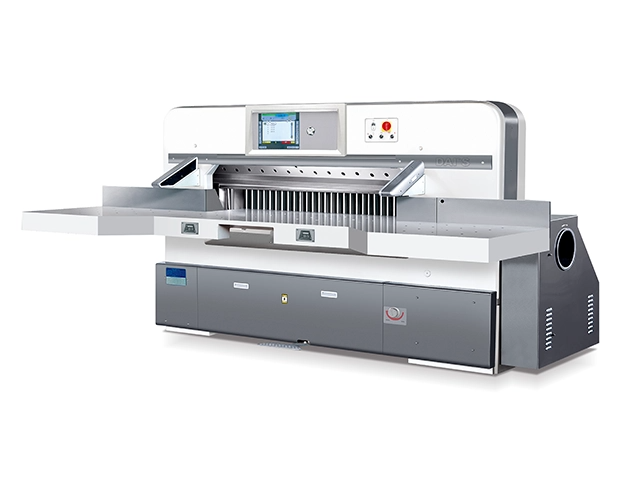
Wasted paper is wasted profit. In small batch runs, you often only have a few "extra" sheets provided by the printer. A single wrong cut on a manual machine can mean the entire batch is short, forcing a costly re-print.
"Measure Twice, Cut Once" Philosophy
The Digital control system allows you to verify your measurements on the screen before the blade ever moves. You can see the exact position of the backgauge relative to the blade. Many machines even feature an "Optical Cutting Line"—a bright red laser that shows exactly where the blade will strike. This visual guide is a lifesaver for designers who need to trim right to the edge of a photo or a complex graphic element.
Long-Term ROI
While an Electric paper cutter is an investment, it pays for itself by:
Reducing the labor hours spent on manual trimming.
Eliminating the cost of re-printing due to cutting errors.
Allowing you to offer "in-house" finishing services rather than outsourcing to a print shop.
Enhancing your ability to work with Large format parent sheets, which are cheaper than pre-cut paper.
The Evolution of the Automatic Cutting Workflow
The transition from manual to Automatic is a significant milestone for any designer. It signifies a move toward professional-scale production without losing the "hand-crafted" essence of small batch work.
Precision Meets Speed
An Automatic machine doesn't just cut; it clamps, cuts, and resets in a matter of seconds. For a designer, this means you can finish a project in 10 minutes that used to take an hour. This reclaimed time can be spent on the creative process—designing the next project—rather than fighting with a manual blade.
Maintenance and Blade Longevity
Heavy duty cutters are built to last. The blades are made from high-carbon steel or tungsten, which stay sharp for thousands of cuts. Most models also allow for the blade to be resharpened multiple times. Because the machine controls the speed and pressure of the cut, the blade wears down much more evenly than it would in a manual guillotine.
Selecting the Right Machine for Your Studio Space
Not every designer needs a floor-standing industrial beast. There are many desktop Electric paper cutter models that offer High precision without taking up the entire room.
For Freelancers: Look for a desktop model with LCD display that fits on a standard heavy-duty workbench. Focus on 450mm to 480mm cutting widths.
For Small Agencies: Consider a Heavy duty floor model with programmable memory to handle frequent, diverse projects.
For Print-on-Demand: A Large format unit is essential if you are printing and trimming posters or larger signage.
Ensure your chosen machine has the Digital control features you need for your specific workflow. If you do a lot of repetitive trimming, programmable memory is a non-negotiable feature.
Conclusion
The jump to an Electric paper cutter is the ultimate upgrade for any graphic designer who takes small batch production seriously. It bridges the gap between digital perfection and physical reality. By offering High precision, Heavy duty durability, and the ease of Digital control, these machines ensure your hard work isn't ruined at the very last stage of production. From the safety of Automatic light curtains to the professional finish of an LCD display controlled backgauge, the benefits are clear. Invest in the right tools, and your design studio will see an immediate increase in both quality and efficiency.
FAQ
Q1: Is an electric paper cutter difficult to learn for someone used to manual tools?
Not at all. Most designers find the Digital control interface very intuitive. If you can use a smartphone or a printer, you can navigate an LCD display menu to set your cut measurements.
Q2: Can I cut materials other than paper, like plastic or thin metal?
While an Electric paper cutter is primarily for paper and cardstock, many Heavy duty models can handle thin plastics or soft foils. However, always check the manufacturer's guidelines, as cutting the wrong material can dull the High precision blade quickly.
Q3: How often does the blade need to be sharpened?
For a studio doing small batch runs, a blade can last 6 to 12 months before needing a professional sharpen. If you notice "burring" on the edges or if the machine sounds like it is struggling, it is time for maintenance.
Our Strength and Manufacturing Excellence
We have spent years observing the transformation of the printing and finishing industry. At our core, we are a manufacturer that understands the delicate balance between industrial power and creative precision. Our factory is a hub of innovation where we develop Electric paper cutter technology specifically designed for the demanding needs of graphic designers and small-scale print shops. We don't just assemble parts; we engineer solutions that prioritize High precision and user safety.
Our strength lies in our rigorous quality control and our deep commitment to the B2B market. We take pride in our "Heavy duty" construction, ensuring that every machine we ship is capable of providing years of reliable service. Our facility utilizes advanced machining tools to create components that meet the tightest tolerances, which is why our cutters are known for their absolute accuracy. Whether it is our Automatic safety systems or our intuitive Digital control panels, we build every machine with the end-user's success in mind. When you partner with us, you are choosing a factory that values the craft of finishing as much as you value the craft of design.


